




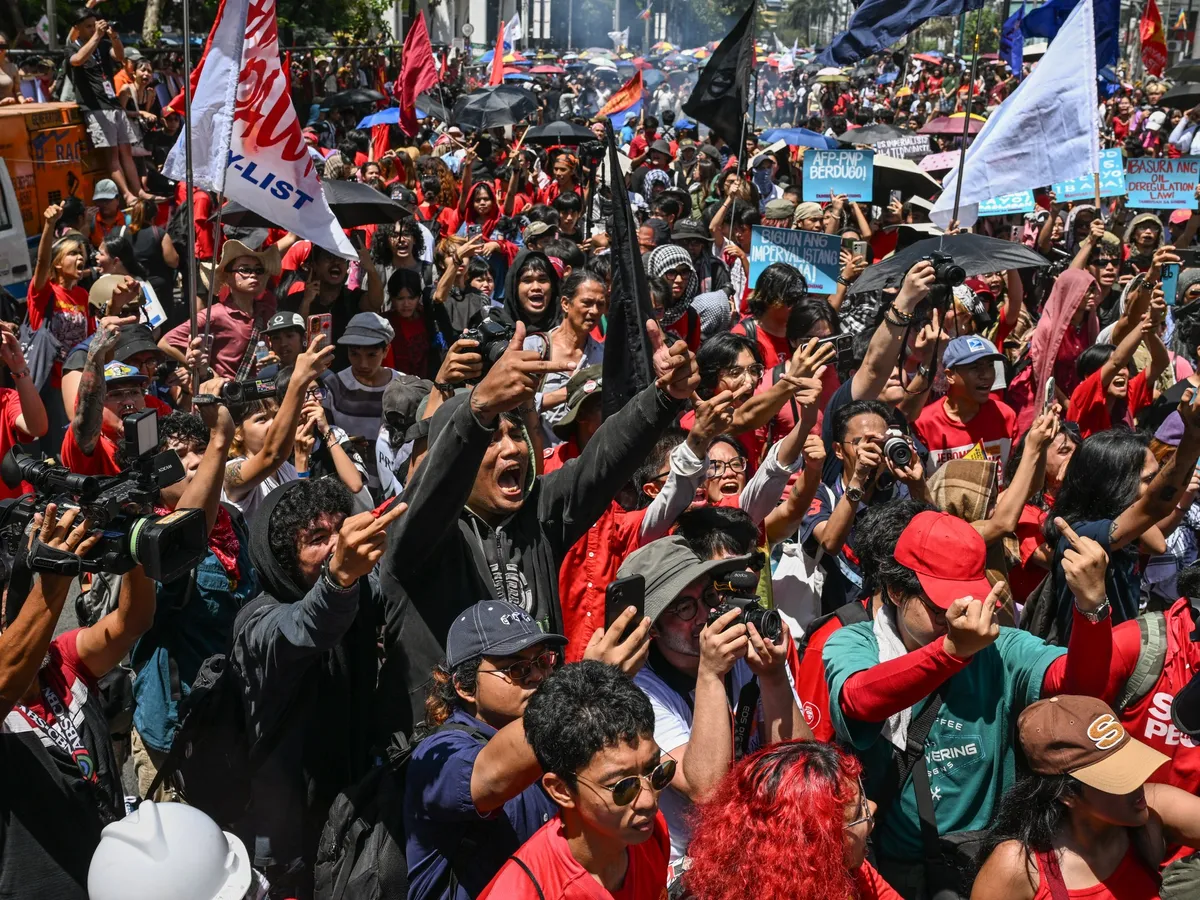
Despite not being a public holiday, protests are planned across the USA for Labour Day, emphasizing the slogan ‘workers over billionaires.’ As fears of a global recession loom, these rallies aim to spotlight income inequality and advocate for workers’ rights.
The roots of Labour Day stretch back to 1886 in Chicago, where workers fought for an eight-hour workday. This historical context resonates today as modern coalitions rally for urgent action against extreme wealth concentration. The theme for 2026 is ‘Ensuring a Healthy Psychosocial Work Environment,’ highlighting the need for safe and dignified workplaces.
Key facts:
- International Labour Day began in Chicago when workers protested for an eight-hour workday.
- About 550,000 workers across Gaza and the West Bank currently have no income due to an ongoing economic crisis.
- The European Trade Union Confederation represents 93 trade union organizations from 41 European countries.
As various groups prepare for May Day protests, the May Day Strong coalition has positioned itself at the forefront of this movement. They argue that working people should not bear the consequences of economic policies that favor the wealthy. The European Trade Union Confederation stated, “Working people refuse to pay the price for Donald Trump’s war in the Middle East,” illustrating how interconnected these issues have become.
Activists are also calling for higher wages and economic relief, particularly in light of unprecedented spikes in fuel prices. Renato Reyes remarked that there will be a louder call for these demands as people feel the pinch of rising costs. Yet, while these movements gain momentum, uncertainties linger—how effective will they be in changing policy?
As we approach Labour Day, it’s clear that workers’ rights and economic justice remain at the forefront of public discourse. The Haymarket incident of May 4, 1886, which strengthened international workers’ rights advocacy, reminds us that this struggle is not new but deeply rooted in history.