



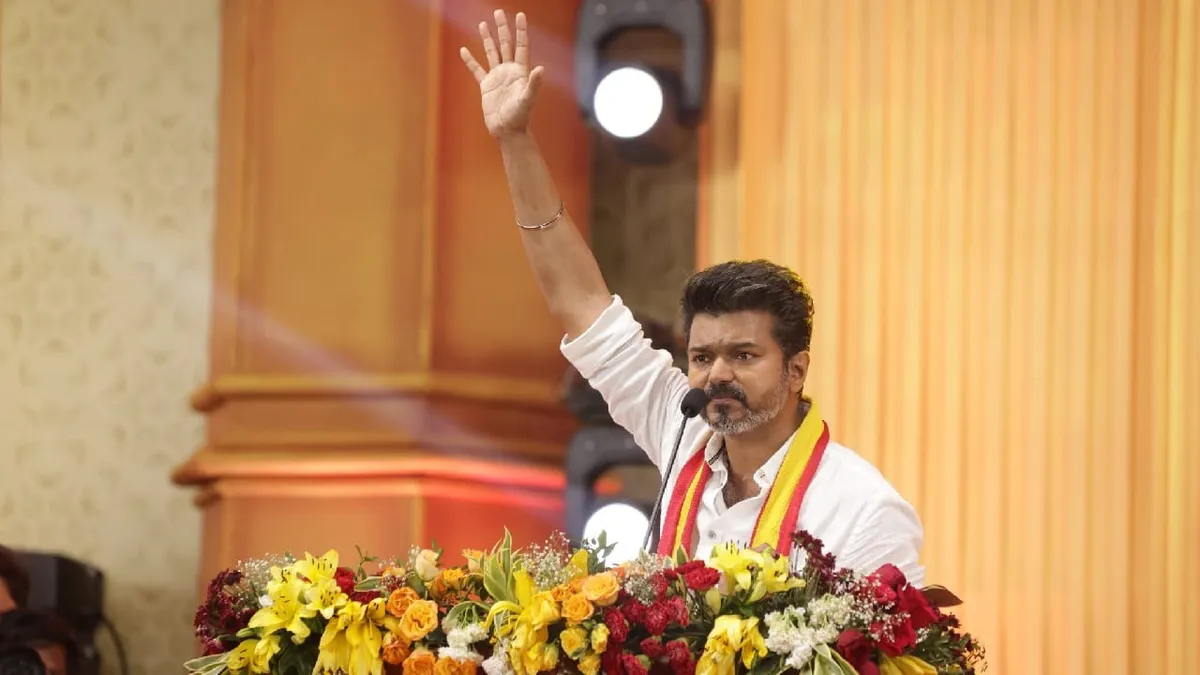
In a surprising turn of events, Vijay’s Tamilaga Vettri Kazhagam (TVK) has emerged as the single largest party in the 2026 Tamil Nadu assembly elections, challenging the long-standing dominance of Dravidian parties. This election was expected to solidify MK Stalin’s position, but it has instead reshaped the political landscape.
Before this election, many analysts predicted that MK Stalin and his party, the Dravida Munnetra Kazhagam (DMK), would continue to hold sway over Tamil Nadu politics. The DMK had been in power for five years, and its governance was seen as a stabilizing force. However, TVK’s rise signifies a shift in voter sentiment.
The decisive moment came when TVK secured an impressive 85 seats out of 234 constituencies, while DMK managed only 41 seats. This shift is not just numerical; it reflects a deeper change in how voters perceive their leaders and their policies.
Key statistics from the election include:
- TVK won 85 seats and is leading on 22.
- DMK won 41 seats and is leading on 18.
- The All India Anna Dravida Munnetra Kazhagam (AIADMK) secured 32 seats and is leading on 15.
The vote share also tells a compelling story. TVK garnered around 34.72 percent, translating to approximately 1.18 crore votes, while DMK followed with about 24 percent, or roughly 84 lakh votes. This suggests that voters are looking for alternatives to traditional party lines.
Udhayanidhi Stalin acknowledged this shift, stating, “The people of Tamil Nadu have delivered their verdict, and we humbly accept it.” Meanwhile, actor Sivakarthikeyan congratulated Vijay for achieving such a significant victory in his first electoral run.
This election might be seen as a referendum on MK Stalin’s governance. The DMK’s previous tenure faced criticism over various issues, which may have contributed to this electoral loss.
The ramifications of this election extend beyond mere numbers; they signal a potential reconfiguration of alliances and strategies among political parties in Tamil Nadu. As parties reassess their positions, one wonders how this will affect future governance and policy-making in the state.
The next few weeks will be crucial as parties regroup and strategize for what lies ahead. Will TVK maintain its momentum? Or will traditional powers find ways to reclaim their influence?