



Scaloni’s Emotional Leadership
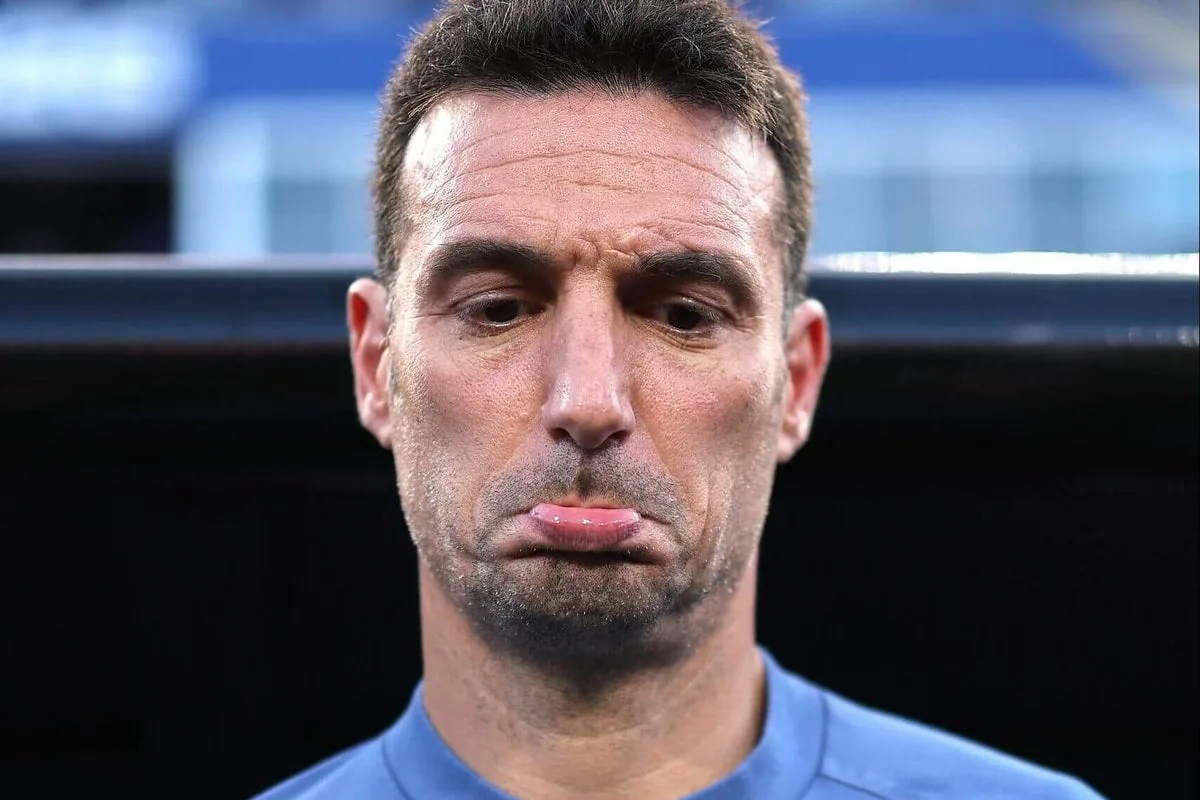
Lionel Scaloni, the coach of the Argentina national team, is known for his emotional and personal approach to managing his squad. This style was notably evident during the 2022 World Cup final, where he became tearful while giving a team talk before the match against France. According to a documentary, El metodo Scaloni, he was unable to continue his address and asked assistant Pablo Aimar to take over, who was also visibly emotional. Another staff member, Walter Samuel, described it as “the worst team talk of all-time” due to the unexpected turn of events.
The players have since affectionately nicknamed Scaloni “the llorona,” or “the crybaby.” His emotional nature has continued to surface, with tears streaming when Lionel Messi scored a hat-trick in Argentina’s opening match against Algeria, and again after a comeback victory against Egypt. Scaloni has expressed comfort with his emotional displays.
This approach contrasts with traditional perceptions of leadership in elite sports, particularly within Argentine football, which is often associated with a tough, machismo image. Despite this, Scaloni has not lost the dressing room. His tenure has seen Argentina end long waits for significant trophies, including the World Cup and the Copa America.
Team Cohesion and Tactical Flexibility
Scaloni’s success is attributed to his focus on relationships within the team. As Rodrigo De Paul noted, the philosophy is about “making the person better to make the game better.” Scaloni has often prioritised feelings over rigid formations, as he stated after the win against Egypt, “I’m a head coach to experience that. Not because I like 4-3-3.”
The coaching staff, including Matias Manna, continually adjust the team based on circumstances. During the World Cup, players like Leandro Paredes, Papu Gomez, and Lautaro Martinez saw their roles change, while Alexis MacAllister, Enzo Fernandez, and Julian Alvarez stepped up. More recently, Paredes has been gradually introduced, sometimes at the expense of Thiago Almada.
Scaloni treats his players as individuals rather than mere tactical pieces. Emi Martinez believes this makes Scaloni “the best manager in the history of the Argentine national team.” Scaloni himself admits that during a game, tactics can sometimes be forgotten, emphasising the importance of “heart, gut instinct and never giving up.”
Beyond on-field strategies, Scaloni values team bonding activities, such as shared meals. He once shortened a training session for an asado, a traditional barbecue, highlighting its importance for team building. He views these shared experiences as crucial for strengthening the team and creating lasting memories among players and staff, some of whom, like Pablo Aimar and Walter Samuel, have a long history with him dating back to the 1997 FIFA World Youth Championship.
This emphasis on identity and emotional intelligence over strict ideology has fostered a strong sense of togetherness within the squad, as reflected in fan chants about staying united.
Upcoming Match Against England
Looking ahead, the Argentina national team is preparing for a match against England at the World Cup. Coach Scaloni is anticipated to make changes to the starting lineup for this encounter. According to Leo Paradizo, if Nicolás González starts, he would play on the left, with Alexis Mac Allister on the right. Alternatively, if Giuliano Simeone is in the starting eleven, he would be on the right, and Mac Allister on the left. Exequiel Palacios is also a potential starter for the match.
Scaloni has described the semi-final against England as “only a game of football,” downplaying any broader historical significance. However, concerns exist regarding potential clashes between fans, leading to heightened alert from FIFA and local police at Mercedes-Benz Stadium, given the continued presence of Barras bravas in Argentine football culture.
Read Also
Source: nytimes.com