


India has returned to the top position in the ICC Men’s T20I Team rankings following their success in the series against Zimbabwe in Harare. The team secured an unassailable lead in the series, moving past England, who had previously held the top spot.
The current ICC Men’s T20 World Cup champions regained their ranking after a strong performance against Zimbabwe. This follows England’s earlier dethroning of India after a 4-0 T20I series victory at home.
Batting performances secure series win
In the second T20I against Zimbabwe, India’s batters played a crucial role. This followed a dominant win in the first T20I, where the bowlers and a record innings by Vaibhav Sooryavanshi were key contributors.
After losing two early wickets, Ishan Kishan and Shreyas Iyer formed a 66-run partnership. Following this, Tilak Varma contributed a notable innings, scoring 60 off 29 balls. Kishan was the highest scorer in the match with 81 runs off 44 balls.
Speaking after the match, Kishan commented on his approach, stating, “We were down two wickets, but at the same time as a batter batting at no.3, your job is to just watch the ball and play your natural game.” He also mentioned the importance of understanding the wicket and building partnerships, adding, “Shreyas Iyer came in and we just wanted to build a partnership and take the innings deep. And I think we executed our plans in a good manner.”
Zimbabwe, chasing a target of 220, lost five wickets within the first nine overs and were eventually bowled out for 129, giving India an unassailable lead in the T20I series.
Sooryavanshi’s record-breaking feat
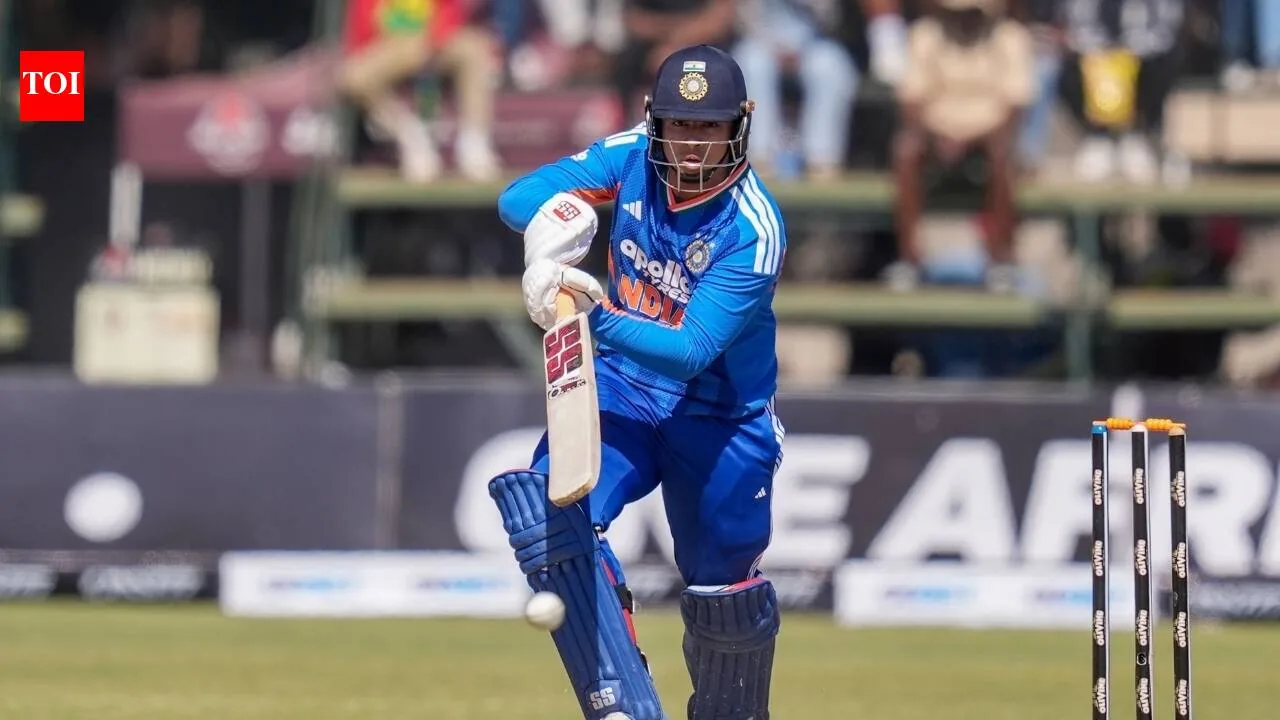
Vaibhav Sooryavanshi continued to make history, becoming the first player in men’s international cricket to achieve multiple scores of 50 or more before turning 16. The 15-year-old left-handed opener accomplished this during the third and final T20I against Zimbabwe in Harare on Sunday.
In that match, Sooryavanshi scored 81 runs off 48 balls, helping India reach 192/5 after electing to bat first. Previously, only Nepal’s Kushal Malla had recorded a 50-plus score in men’s internationals before turning 16. Sooryavanshi now holds two such scores.
Despite a pitch that offered assistance to bowlers, Sooryavanshi adapted his batting. He started cautiously, scoring 11 runs from his first 10 balls and 26 from his first 20 deliveries, before reaching his second T20I fifty in 31 balls. His innings featured powerful strokes, including a drive for four off Brad Evans and a 102-metre six off Sikandar Raza, as well as a boundary off Wesley Madhevere.
While Sooryavanshi settled, his opening partner Abhishek Sharma continued a period of low scores, edging Blessing Muzarabani for two runs. Sooryavanshi then added 75 runs for the second wicket with Ishan Kishan, who made 29, and a 50-run partnership with captain Shreyas Iyer, who scored 27.
Sooryavanshi’s innings ended on 81 when Wesley Madhevere dismissed him, with Brad Evans completing the catch. After the departures of Sooryavanshi and Shreyas, India’s scoring rate slowed, with the middle order adding 47 runs in the final five overs. Rinku Singh’s 25 runs off 14 balls helped India approach the 200-run mark, finishing on 192/5.
Squad depth and future assignments
With the series already decided, India aimed to test the depth of their squad in the final match and pursue a clean sweep. The back-to-back victories helped to overcome the disappointment of India’s previous tour of Ireland and England, where they faced six consecutive defeats. Under new captain Shreyas Iyer, the team has shown an impressive response, building confidence and momentum for upcoming international fixtures.
The final match provided an opportunity for experimentation. Iyer had indicated potential changes after fast bowler Prince Yadav sustained a hamstring injury during his match-winning performance in the second T20I. Left-arm seamer Ashok Sharma was a strong candidate to replace him, with uncapped wicketkeeper-batter Prabhsimran Singh and all-rounder Suryansh Shedge also considered for opportunities.
A 3-0 series win would mark a significant achievement for India, as they had not completed a T20I whitewash over Zimbabwe since 2010. Beyond the result, the team management focused on assessing fringe players to build squad depth for future assignments. India’s batting gained momentum throughout the series, with Ishan Kishan finding his form, Tilak Varma anchoring the middle order, and Vaibhav Sooryavanshi continuing to impress. Although Abhishek Sharma had a challenging run with the bat, his bowling contributions highlighted his all-round value.
Zimbabwe, meanwhile, aimed to avoid a whitewash. Brian Bennett displayed promising moments, but the hosts struggled to match India’s consistency. The final match took place at the Harare Sports Club in Harare.
The predicted playing XIs for the final match included Vaibhav Sooryavanshi, Abhishek Sharma, Prabhsimran Singh (Wicketkeeper), Shreyas Iyer (Captain), Tilak Varma, Rinku Singh, Suryansh Shedge, Ravi Bishnoi, Ashok Sharma, Yash Thakur, and Mayank Yadav for India. For Zimbabwe, the predicted lineup featured Brian Bennett, Ben Curran, Dion Myers, Sikandar Raza (Captain), Ryan Burl, Wesley Madhevere, Tadiwanashe Marumani (Wicketkeeper), Brad Evans, Newman Nyamhuri, Richard Ngarava, and Blessing Muzarabani.
Source: icc-cricket.com