



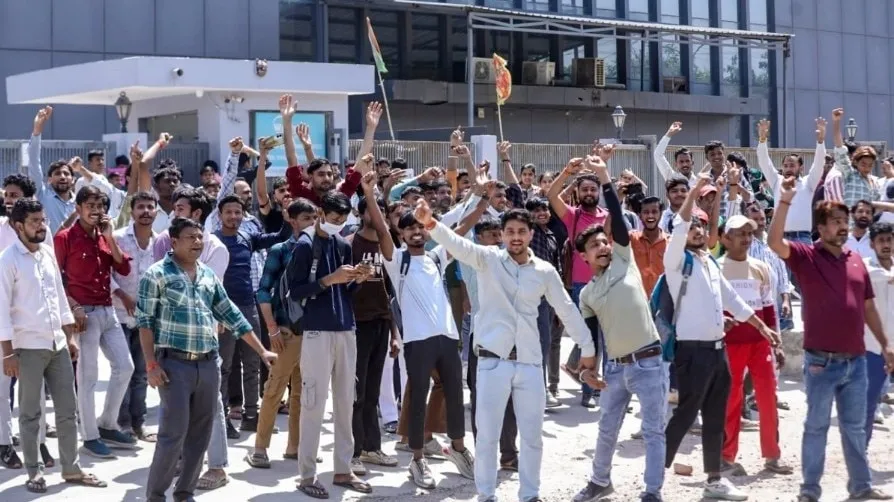
On April 13, 2026, Noida witnessed significant unrest as a labour protest brought traffic to a near standstill for nearly six hours. The protests, which began on April 9, were fueled by workers’ frustrations over rising living costs and stagnant wages, leading to a chaotic scene across key thoroughfares.
The worst affected areas included the Delhi-Noida Link Road, the DND flyway, and the Delhi-Meerut Expressway, where long tailbacks stretching several kilometres were reported. Commuters faced immense delays, with one individual, Ankit Sharma, stating, “It took me nearly two and a half hours to reach from Indirapuram to Okhla. Usually, it’s a 45-minute drive.” The Delhi Traffic Police issued its first advisory at 11:48 am, but many were already caught in the turmoil.
As the day progressed, the situation began to ease by mid-afternoon, and traffic was nearly back to normal by late evening. However, the disruption had already impacted school operations in both Delhi and Noida, highlighting the widespread effects of the protests.
Local authorities faced criticism for their handling of the situation. The Local Intelligence Unit of the Noida Police reportedly failed to provide timely intelligence, which contributed to the breakdown of law and order. In response to the unrest, Uttar Pradesh Labour Minister Anil Rajbhar stated that the protests are being investigated as part of a “larger conspiracy,” even suggesting a possible link to Pakistan. He urged the public not to fall prey to misleading information or provocation and to maintain peace.
The protests also resulted in vandalism across 80 factories in Greater Noida and Noida, raising concerns about the safety and security of workers and businesses in the area. Neha Gupta, a commuter, expressed frustration, saying, “There was no proper advisory in the morning. By the time we realised what was happening, we were already stuck in the middle of it.”
The unrest has sparked discussions about the underlying issues affecting workers in the region, particularly the rising cost of living and stagnant wages that have prompted these protests. As the situation unfolds, the effectiveness of police and administrative responses remains unconfirmed, leaving many to wonder how such unrest can be prevented in the future.
Details remain unconfirmed regarding the exact nature of the “larger conspiracy” mentioned by Minister Rajbhar, but the implications of these protests are clear. As Noida grapples with these challenges, the need for dialogue and action to address workers’ grievances has never been more urgent.