




The Indian Air Force (IAF) is on the brink of a significant transformation. This isn’t just about acquiring new aircraft or technology; it’s about fundamentally changing how the IAF operates and maintains its fleet. Recently, GE Aerospace inked an agreement with the IAF to establish an in-country depot facility for F404-IN20 engines. This move is crucial. It marks a long-term commitment to enhancing the IAF’s capabilities and operational readiness.
Historically, GE Aerospace has had a four-decade-long partnership with the Indian Air Force. This relationship has evolved over the years, but now it seems to be reaching a new zenith. The establishment of this facility will bolster in-country repair and overhaul infrastructure specifically for the IAF’s Light Combat Aircraft Tejas fleet. Why does this matter? Simply put, it reduces dependency on foreign maintenance facilities and enhances self-reliance.
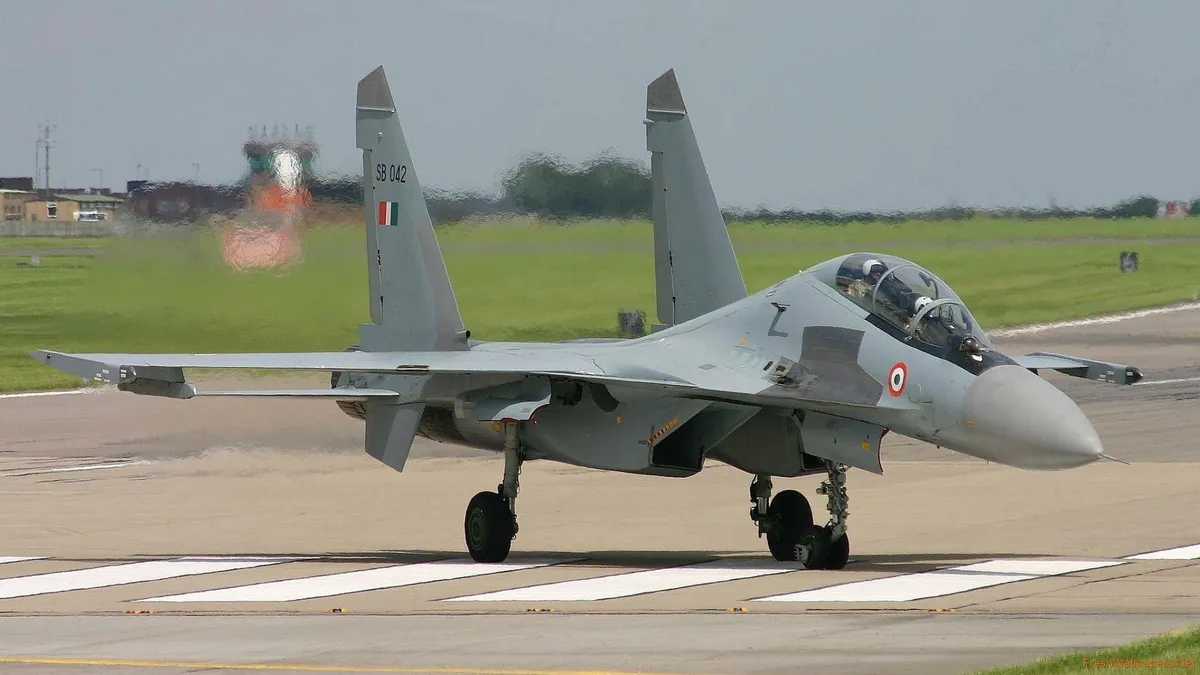
But that’s not all. Just as this agreement was announced, a different situation unfolded at Pune airport: the IAF temporarily closed operations due to a hard landing incident involving one of its aircraft. The aircraft experienced an undercarriage failure upon landing—an unsettling reminder of the risks involved in military aviation. It took 4-5 hours to move the aircraft and restore the runway, highlighting logistical challenges that can arise unexpectedly.
Meanwhile, on another front, the Chief of the Indian Air Force undertook a familiarisation flight in a Boeing F-15EX Eagle II fighter aircraft at Nellis Air Force Base. This advanced multirole fighter developed by Boeing can carry a staggering payload of up to 29,500 pounds (or 13,381 kilograms). With a top speed of Mach 2.5 and a service ceiling of 50,000 feet, it represents cutting-edge technology in military aviation.
What does this mean for India? The U.S. Air Force has emphasized the importance of its defense partnership with India during meetings with the Indian Air Chief. Such collaborations are vital for strengthening regional security dynamics and ensuring that both nations can operate effectively together in times of need.
Yet, while these developments are promising, they also raise questions about future military strategies and capabilities. How will these new facilities and partnerships shape the IAF’s operational tempo? Will they be enough to counterbalance regional threats? Observers are keenly watching how these changes will unfold in real-time.
As we ponder these questions, it’s clear that the landscape of military aviation in India is shifting rapidly. The establishment of local maintenance facilities could redefine operational readiness for the IAF. Still, details remain unconfirmed regarding how soon these changes will be fully realized.