



The CUET PG 2026 results are crucial as they will determine eligibility for admissions across 198 universities this year. Released on April 24, candidates can now access their CUET PG scorecard at exams.nta.nic.in/CUET-PG/. The pressure has been palpable—students have been waiting anxiously since the exam concluded on March 27.
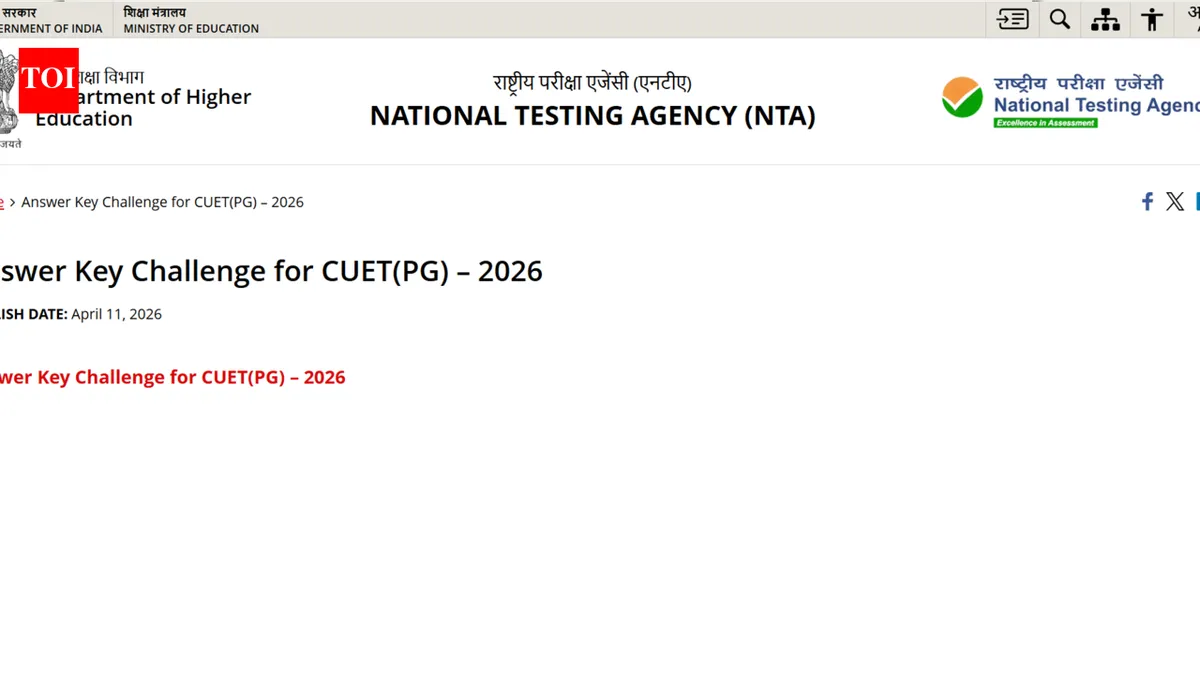
The examination itself ran from March 6 to March 27, a period packed with stress and anticipation. Candidates faced a computer-based test (CBT) that was bilingual, except for certain papers. They had their hopes pinned on the provisional answer key released on April 11, which allowed them to gauge their performance before the final results came out.
But the timeline hasn’t been without its complications. Following the release of the answer key, an objection window opened until April 14, allowing candidates to contest any discrepancies they found. This process is vital; it ensures fairness in evaluation, especially when multiple-choice questions are involved.
Now that the results are declared, students must navigate the next steps in the CUET PG counselling process. Each university will publish its own eligibility criteria based on CUET PG scores, leading to a myriad of potential outcomes for applicants. The stakes are high—many students’ futures hinge on these results.
Importantly, the CUET PG scorecard contains not just marks but also candidate details like name and application number. It’s more than just a number; it’s a key that could unlock doors to further education at one of the many participating universities.
As candidates sift through their scores, they might wonder about passing marks and cutoffs—questions that loom large over this competitive landscape. Each university will set its own benchmarks based on these scores, making it all the more critical for students to perform well.
So where do we stand now? With results in hand, students are entering a crucial phase of decision-making and preparation for what lies ahead. The implications stretch beyond mere numbers; they encompass aspirations, dreams, and the pursuit of knowledge.
This sequence of events matters immensely—not just for individual candidates but for educational institutions as well. How will universities adapt their criteria in response to this year’s results? And how will candidates strategize their applications based on varying cutoffs? The answers remain uncertain as we step into this new chapter.