



As India approaches a pivotal moment in its political landscape, the Union Government has proposed a significant increase in the strength of the Lok Sabha, from its current 543 members to a staggering 850. This proposal, set to be discussed during the Special Session of Parliament on April 16 and 17, 2026, marks a crucial step in redefining the representation of the Indian populace.
The proposed amendment seeks to delete the stipulation that delimitation must follow the post-2026 Census. This change is particularly noteworthy given that the current composition of the Lok Sabha is based on the 1971 Census, a decision that has long been criticized for not reflecting the demographic shifts that have occurred over the decades. The last published census was in 2011, and the next one is expected to conclude in 2027, leaving a significant gap in the representation of the electorate.
Central to this proposal is the amendment to Article 82 of the Constitution, which governs the process of readjustment of parliamentary constituencies following each Census. The Bill also proposes an amendment to Article 81, allowing for a maximum of 815 members from the states and 35 from Union Territories. This change aims to ensure that the representation in the Lok Sabha is more aligned with the current population distribution.
One of the most progressive aspects of the Bill is the provision for 33% reservation for women in both the Lok Sabha and State Assemblies. This move is expected to enhance women’s participation in politics, a long-standing demand from various sectors of society. The empowerment of women in legislative roles could lead to more inclusive governance and representation.
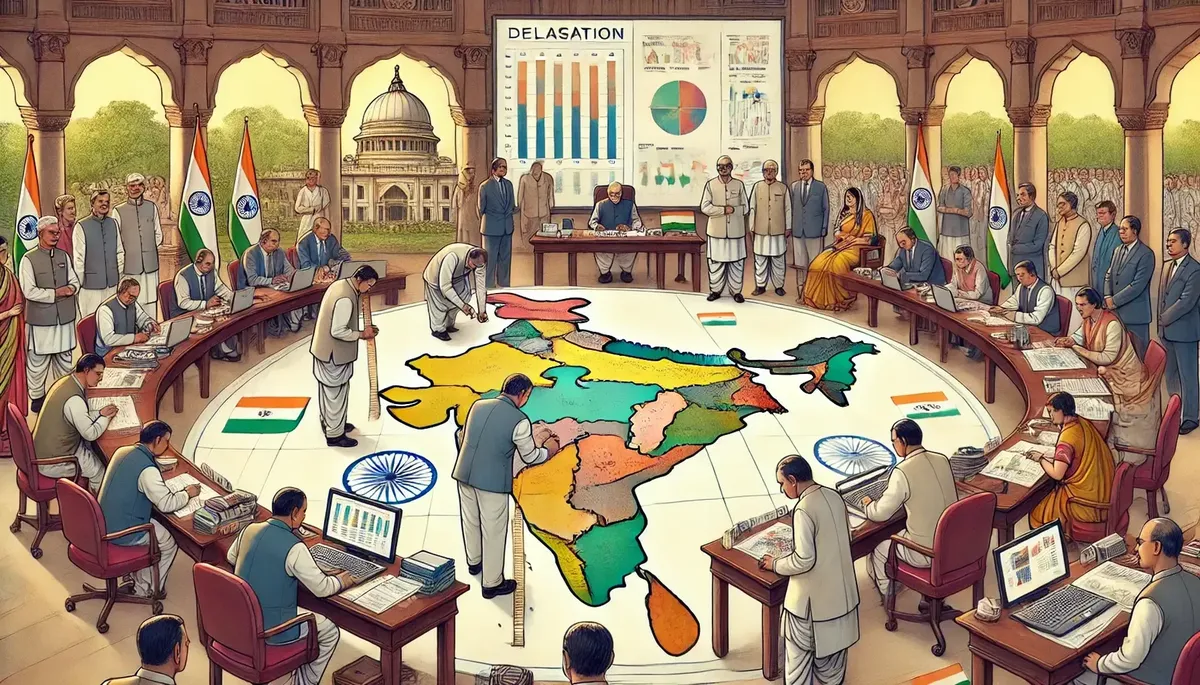
The Delimitation Bill will empower the Central Government to constitute a Delimitation Commission, which will be chaired by a person who is or has been a Judge of the Supreme Court. This commission will have the authority to redraw constituency boundaries, a power that has significant implications for the political landscape of India. Once the orders issued by the Delimitation Commission are published in the Gazette of India, they will have the force of law and cannot be challenged in any court.
The implications of this sequence of events are profound for those involved in the political arena. The proposed changes could alter the balance of power among political parties, especially in states where demographic shifts have occurred since the last delimitation. Additionally, the introduction of women’s reservation may encourage more women to enter politics, potentially transforming the dynamics of political representation in India.
As the nation gears up for this critical discussion in Parliament, the outcome of the delimitation Bill will undoubtedly shape the future of Indian democracy. The proposed changes not only reflect the government’s intent to modernize the political framework but also highlight the ongoing dialogue about representation and equality in governance. The stakes are high, and the eyes of the nation will be on the Parliament as these discussions unfold.