


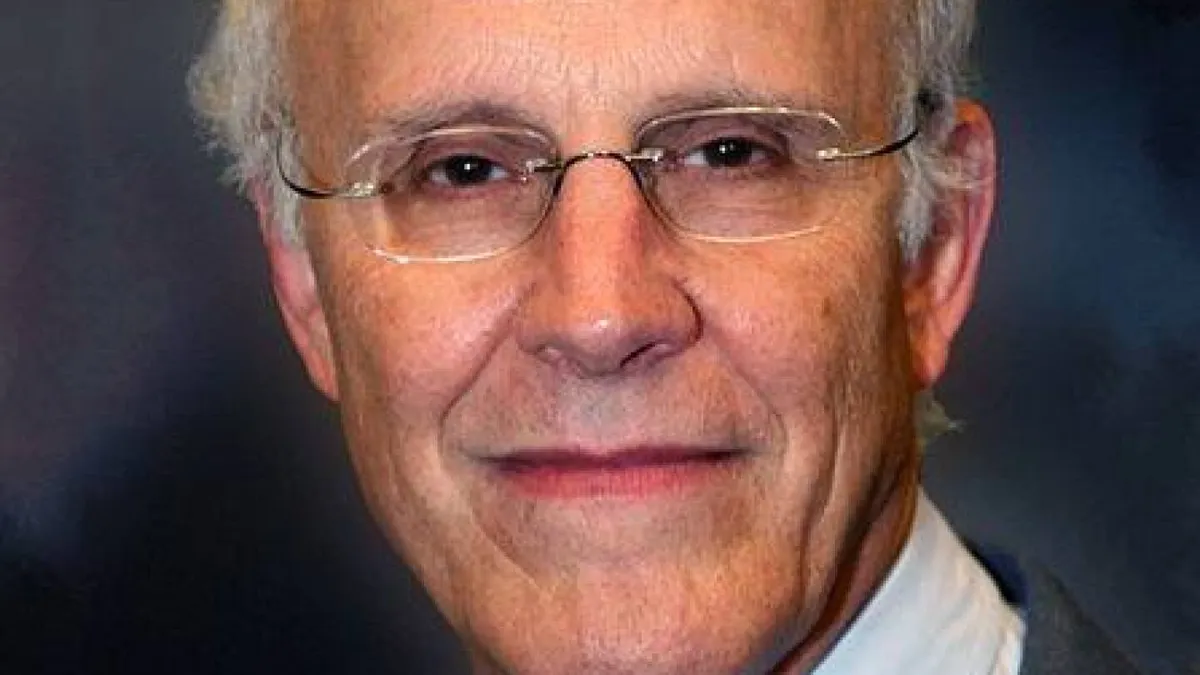
David Gross is not just a name in theoretical physics; he’s a harbinger of a troubling future. The Nobel Prize winner, acclaimed for his discovery of asymptotic freedom in the theory of strong interactions, recently received the Special Breakthrough Prize—a staggering $3 million award. Yet, while accolades pile up, Gross presents a chilling forecast for humanity.
He estimates that we might have only 50 years left. Yes, you read that correctly. In his view, the chances of surviving beyond that are slim—so slim, in fact, that he quantifies it with a 2% annual risk of nuclear war. “The expected lifetime is about 35 years,” he asserts bluntly. It’s not just an abstract calculation; it’s a stark reality check.
Asymptotic freedom—this concept suggests that the force between quarks weakens as they get closer together—has profound implications. It helped complete the Standard Model of particle physics, unifying fundamental forces. But what does this matter when faced with the potential annihilation of our species? It seems almost trivial in comparison.
Gross believes we are entering an incredible arms race. With nine nuclear powers currently on the global stage, the complexity and risk of conflict have escalated dramatically. This isn’t just about numbers; it’s about geopolitical tensions that could lead to catastrophic outcomes. “I feel it’s not a rigorous estimate,” he mentions regarding his 2% figure, hinting at an underlying anxiety that perhaps even he finds unsettling.
But why should we care about the thoughts of one physicist? Because Gross’s ideas resonate beyond academia—they touch upon our collective future. His warnings echo through scientific communities and policy-making circles alike. The intersection of theoretical physics and existential risk is where his expertise becomes critical.
In a world increasingly defined by uncertainty and rapid technological advancement, Gross stands as both a guide and a prophet. He has dedicated his life to understanding the universe at its most fundamental level while simultaneously grappling with threats that could obliterate it entirely. Yet here we are—celebrating breakthroughs in our understanding of reality while potentially marching toward our own extinction.
The paradox is striking: we push boundaries in science even as we flirt with disaster on a global scale. Are we too late to change course? Or can we harness this knowledge to avert catastrophe? As Gross continues to explore the cosmos’s mysteries, one must wonder: will humanity heed his warnings or remain blissfully ignorant until it’s too late? Details remain unconfirmed.