



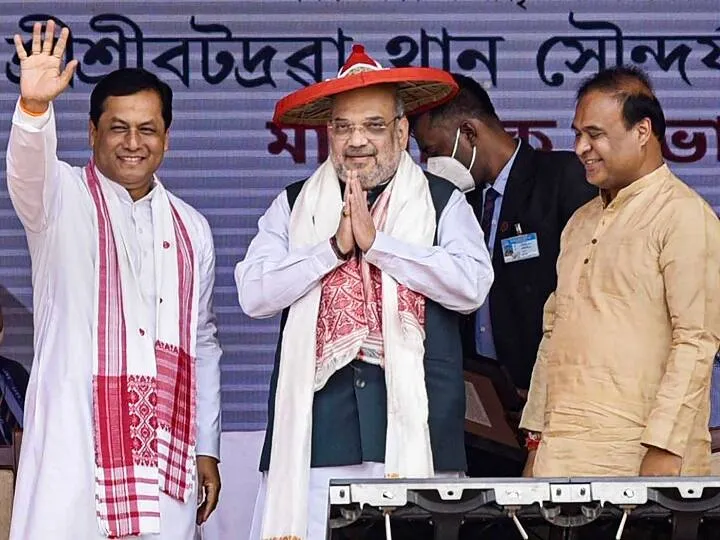
The BJP has secured 73 seats in the Assam elections, marking a historic third consecutive term in the state. This victory highlights the effectiveness of their election strategy and solidifies their dominance in the region.
In addition to the BJP’s success, other parties also made their mark. The Asom Gana Parishad (AGP) won 6 seats, while the Bodoland People’s Front (BPF) secured 8 seats. The Congress party managed to gain 10 seats, showing some resilience against the BJP’s stronghold. Meanwhile, the All India United Democratic Front (AIUDF) clinched 2 seats, and both Raijor Dal and Trinamool Congress (TMC) managed to win 1 seat each.
This election was marked by an impressive voter turnout of over 85%, reflecting a high level of engagement among the electorate. Observers noted that this turnout could be attributed to various factors, including intense campaigning and significant local issues that resonated with voters.
The counting process began on May 4, 2026, with Himanta Biswa Sarma continuing as Chief Minister of Assam. His leadership has been pivotal in navigating complex political landscapes, particularly against opposition leader Gaurav Gogoi of Congress.
The BJP is currently leading in 9 out of 25 remaining seats, while Congress is ahead in 10 out of those remaining seats. This ongoing tally may still shift as final counts are confirmed.
This victory for the BJP not only signifies a continuation of their policies but also sets the stage for what will likely be a contentious battle leading up to the 2026 Assam elections. Political alliances and strategies will undoubtedly evolve as parties assess their positions following this electoral outcome.
The implications of these results are far-reaching. As Sarma prepares for another term, questions linger about how this will affect governance and policy direction in Assam moving forward.