




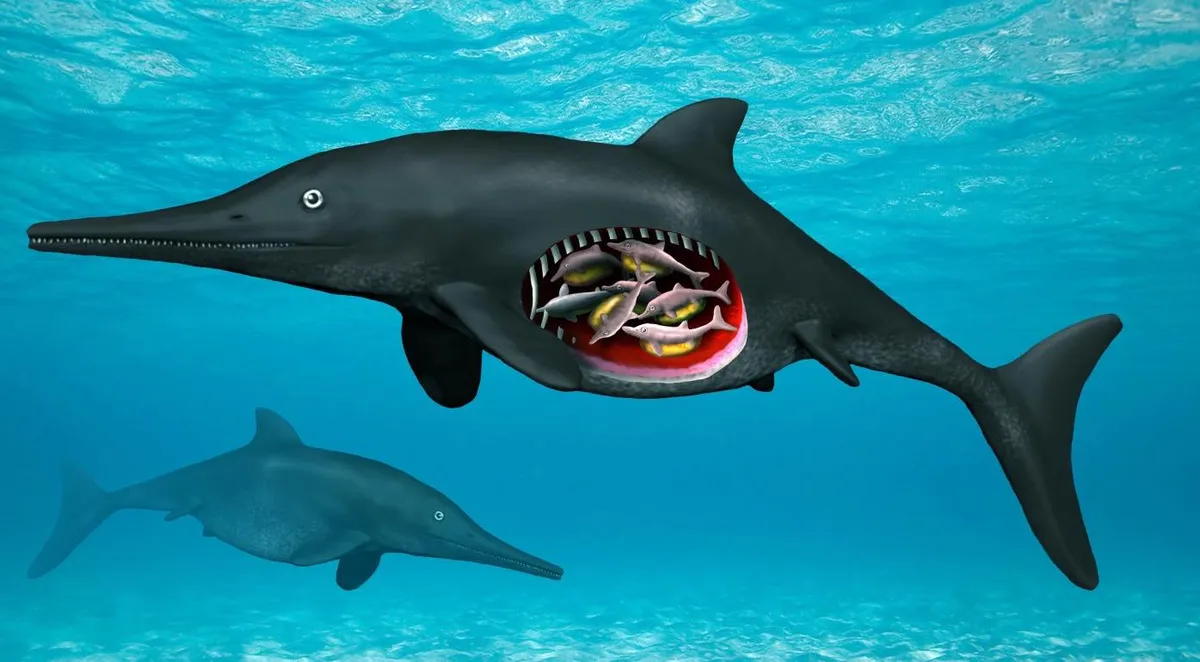
A remarkable ichthyosaur fossil discovered in Germany reveals how this ancient marine predator survived against the odds, even after suffering severe jaw injuries. Dating back approximately 180 million years, the specimen belongs to the Temnodontosaurus genus, a group of marine reptiles that ruled the Jurassic seas.
This fossil was unearthed in the Mistelgau clay pit, a site renowned for its well-preserved marine fossils. Researchers found fragments of the skull, lower jaw, shoulder girdle, forefins, spine, and over 100 teeth. This level of preservation offers invaluable insights into Jurassic sea life.
The ichthyosaur could grow over 20 feet (around 6.5 metres) long and bears a striking resemblance to modern dolphins. But what’s truly fascinating is the evidence of its injuries. The specimen shows signs of severe jaw trauma—suggesting that it lived with these challenges for an extended period.
Researchers in Germany stated that this well-preserved specimen highlights not just the physical adaptations of ichthyosaurs but also their resilience in the face of adversity. The findings imply that these ancient marine predators might have survived longer than previously believed.
As paleontologists continue to study this extraordinary find, it raises questions about the adaptability and survival strategies of marine reptiles during the Jurassic period. How did ichthyosaurs cope with injuries in such a competitive environment? What other secrets might this fossil hold?