

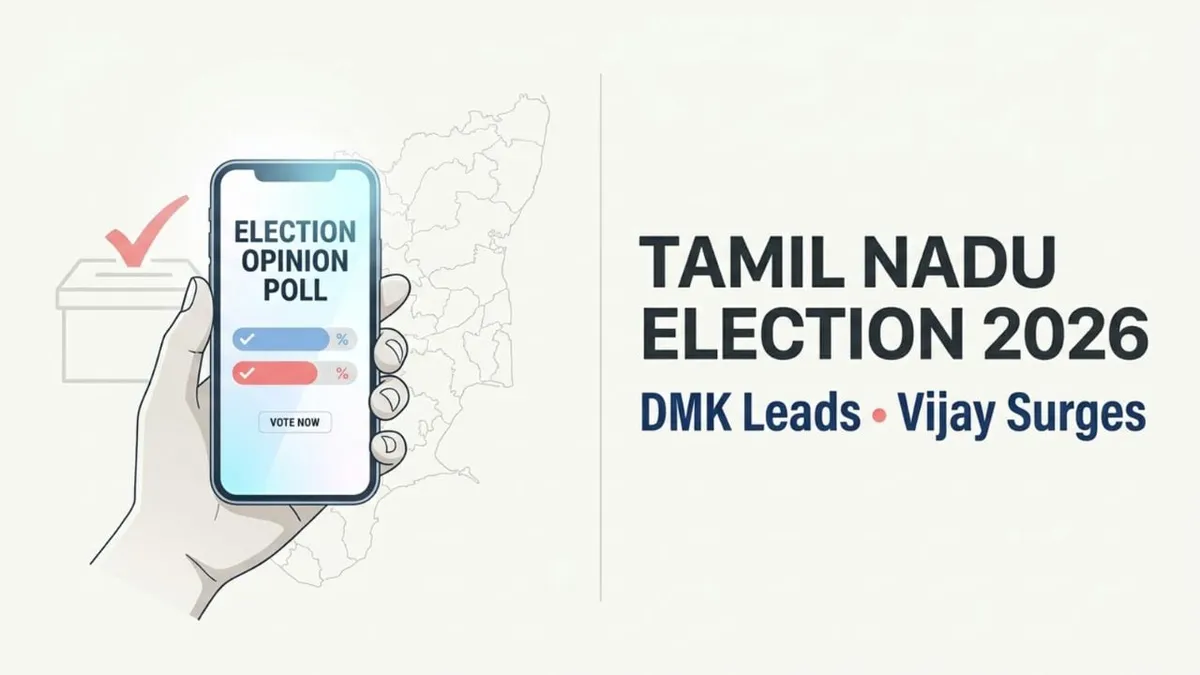
In the lead-up to the 2026 Tamil Nadu Assembly elections, a palpable tension fills the air. The Vikatan election survey has just been released, and it paints a complex picture of the political landscape. The stakes are high—234 constituencies will decide who governs this vibrant state.
As we inch closer to April 18, 2026, the dynamics are shifting. The Dravida Munnetra Kazhagam (DMK) is projected to retain power, with forecasts suggesting they could secure around 121 seats. This projection seems to stem from their welfare-oriented governance model and stable leadership image, which continues to resonate with voters.
Yet, there’s a twist. The emergence of Vijay’s Tamilaga Vettri Kazhagam (TVK) has significantly altered the electoral dynamics. With a projected vote share of 24.71%, TVK is not just another party; it’s a contender that could disrupt long-standing political patterns. Could this be the dawn of a new era in Tamil Nadu’s politics?
The numbers tell a compelling story. While DMK is expected to maintain its majority, 62% of survey respondents expressed a desire for regime change. This contradiction raises questions about voter sentiment—are they dissatisfied with the current government, or do they simply want options? And what does this mean for the AIADMK alliance, projected to secure only 83 seats? Their traditional support base appears to be eroding.
The survey covered an impressive 93,600 voters, a robust sample that reflects diverse opinions across all constituencies. Among them are over 12.5 lakh first-time voters, who may be swayed by new narratives and candidates. This demographic shift could be pivotal—how will these young voters influence the outcome?
The political landscape in Tamil Nadu is evolving rapidly. Despite DMK’s organizational strength and recent vote consolidation efforts, their advantage isn’t guaranteed. As one analyst noted, “Tamil Nadu’s electoral politics is entering a new phase where clear majorities can no longer be taken for granted.” This sentiment underscores the unpredictability of upcoming events.
The final outcome of these elections remains uncertain due to potential last-minute swings and the impact of new political forces like TVK. Details remain unconfirmed regarding how these dynamics will play out as we approach polling day.
This unfolding narrative matters deeply—for politicians navigating their strategies and for voters seeking representation that resonates with their aspirations. As we watch this space evolve, one question lingers: Will established parties adapt quickly enough to retain their hold in a changing electorate?