

Tournament concludes with Spain’s victory
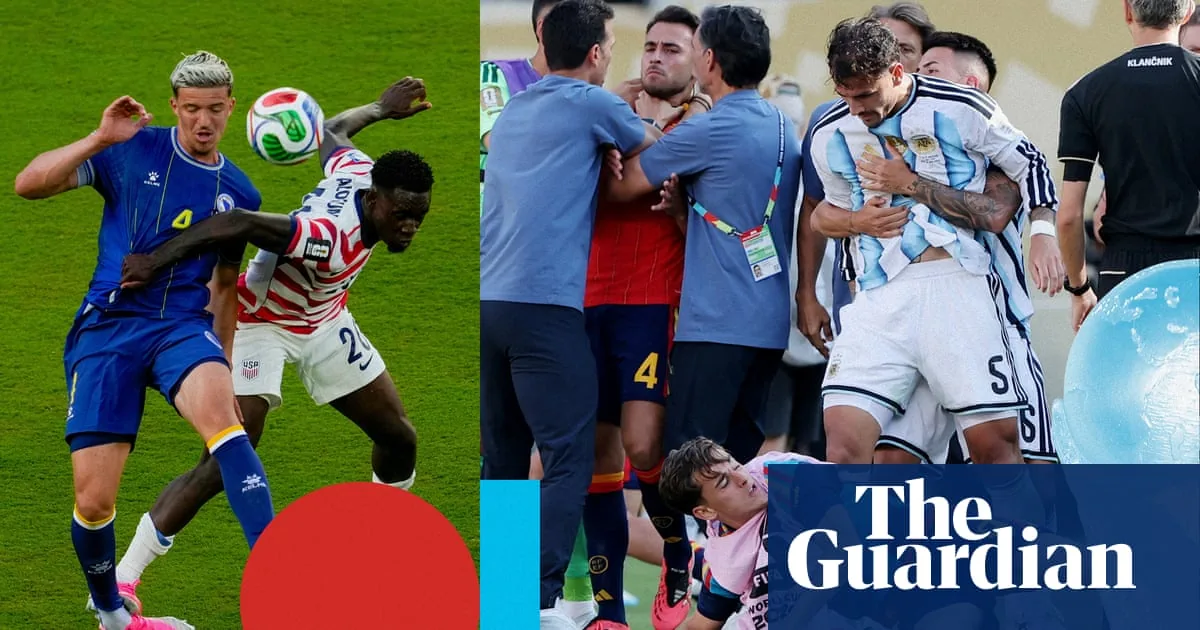
The recent World Cup concluded with Spain securing the trophy after defeating reigning champions Argentina in the final. The Spanish team had previously overcome tournament favourites France. The trophy presentation saw an unexpected moment as United States President Donald Trump remained on stage, requiring FIFA President Gianni Infantino to usher him away before Spain captain Rodri could lift the prize. This marked an unusual end to a tournament that featured a mix of spectacle and controversy.
The president had previously ordered a halt to US trade with Spain, citing insufficient military spending and opposition to the US-Israel war on Iran. His presence and actions were part of a broader theme of political involvement throughout the competition.
Divisive elements and fan experiences
The World Cup presented a mixed experience for fans. Some celebrated American hospitality, noting how cities like Kansas City embraced Algeria and Boston welcomed Scottish fans. However, others pointed to the Trump administration’s policies, including visa denials, alleged mistreatment of the Iranian team, and the incident involving Somali referee Omar Artan, who was reportedly not allowed into the country.
The tournament also saw varying perspectives based on national team performance. Egyptians, for instance, might focus on controversial refereeing decisions during their Round of 16 match against Argentina. Argentinians, conversely, could highlight their team’s resilience and comebacks leading to the final. For nations like Jordan, Iraq, and Haiti, mere participation was a source of gratitude.
The competition featured unexpected strong performances, including Cape Verde’s heroic run and Norway’s deep progression to the quarter-finals. Despite these Cinderella stories, the four top-ranked FIFA teams ultimately reached the semi-finals. The event showcased football’s capacity to unite and bring joy, with fans of losing teams continuing to celebrate the sport.
However, the tournament was also used to amplify divisions. Some Iranian fans reported experiencing abuse and Islamophobic chants from anti-government activists. The US hosts imposed what were described as arbitrary travel restrictions on the Iranian team. Following Iran’s failure to advance from the group stage, US Department of Homeland Security Secretary Markwayne Mullin expressed personal satisfaction.
The World Cup, much like FIFA itself, is intended to be apolitical. Yet, some observers, including a Palestinian American fan in New York, viewed it as a “political summit,” with President Trump taking a prominent role. The president acknowledged contacting top FIFA officials to reverse the suspension of USA striker Florian Balogun, though Team America subsequently lost 4-1 to Belgium. Throughout the event, many fans displayed Palestinian flags, while others showed Israeli flags.
American influence and accessibility concerns
The tournament brought the sport to a country that has historically not fully embraced football, leading FIFA to permit an Americanized approach. This included mid-half hydration breaks for commercials, championship rings, and half-time shows. For many, this represented an effort to adapt the game to US customs.
Football’s global appeal is often attributed to its accessibility, requiring only a ball to play. However, at this World Cup, watching matches became a luxury. Ticket prices ranged from hundreds to hundreds of thousands of dollars, effectively excluding many working-class fans. For individuals like Juan Cortes, a mechanic in the Los Angeles area, the stadium was geographically close but financially out of reach.
The perceived distance was also evident in the final’s location. International viewers might have believed the match was in New York due to the skyline in the background. In reality, the New York New Jersey stadium is situated in suburban New Jersey, surrounded by car parks and motorways, making it difficult to access on foot for city residents.
Despite these issues, the World Cup delivered memorable moments, including excitement, near misses, late comebacks, individual heroics, and heartbreak. These contradictions are seen as a continuation of the sport’s history. As German manager Sepp Herberger famously stated, “The ball is round. The game lasts 90 minutes. Everything else is theory.”
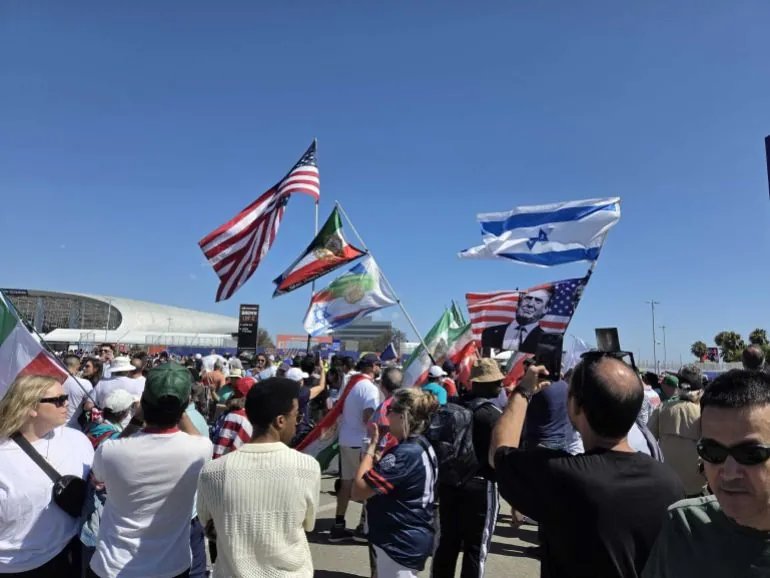
The tournament also faced criticism regarding its organization and treatment of various stakeholders. An Italian newspaper reportedly called the event a “disaster,” highlighting issues such as ticket prices, the Balogun situation, weather conditions, an increased number of games, and reduced rest periods. The newspaper later had its ticket allocation for the final reduced, raising concerns about media access for those critical of the official narrative.
FIFA’s attitude towards the media was also noted as generally contemptuous, with basic organization and facilities at some venues described as the worst in at least six World Cups. While some locations, like Houston and Atlanta, were welcoming, the overall approach suggested that fans were viewed as revenue sources and the media as an inconvenience.
The quality of football was described as good but not exceptional. While many fine and dramatic games occurred, particularly in the Round of 32 and Round of 16, the quarter-finals were less inspiring. Argentina’s semi-final victory over England was thrilling, but Spain’s win against France was reportedly straightforward. The final match itself was characterized as dismal.
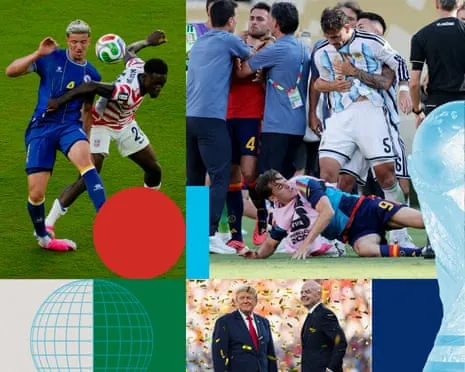
The Balogun Affair, involving political pressure to ensure a specific player could participate, could have long-term consequences, potentially setting a precedent for prioritizing revenue over sporting integrity. This incident, along with the treatment of Iran and the high ticket prices, suggests a shift in the World Cup’s nature from a mass movement to a luxury event. Concerns were also raised about the social and environmental impact on host cities, including street sweeps of homeless individuals in the US and Canada, and issues of water extraction and environmental damage in Mexico related to tournament projects.
The World Cup, despite its controversies, delivered moments of individual brilliance, such as teenage Lamine Yamal making his mark and veterans like Lionel Messi performing at a high level. Unsung heroes, including Spain’s Marc Cucurella and Pedro Porro, played crucial roles, while some prominent players from the German and Portuguese squads did not leave a significant impression. The tournament’s conclusion prompts reflection on its complex legacy.
Read Also
Source: aljazeera.com