



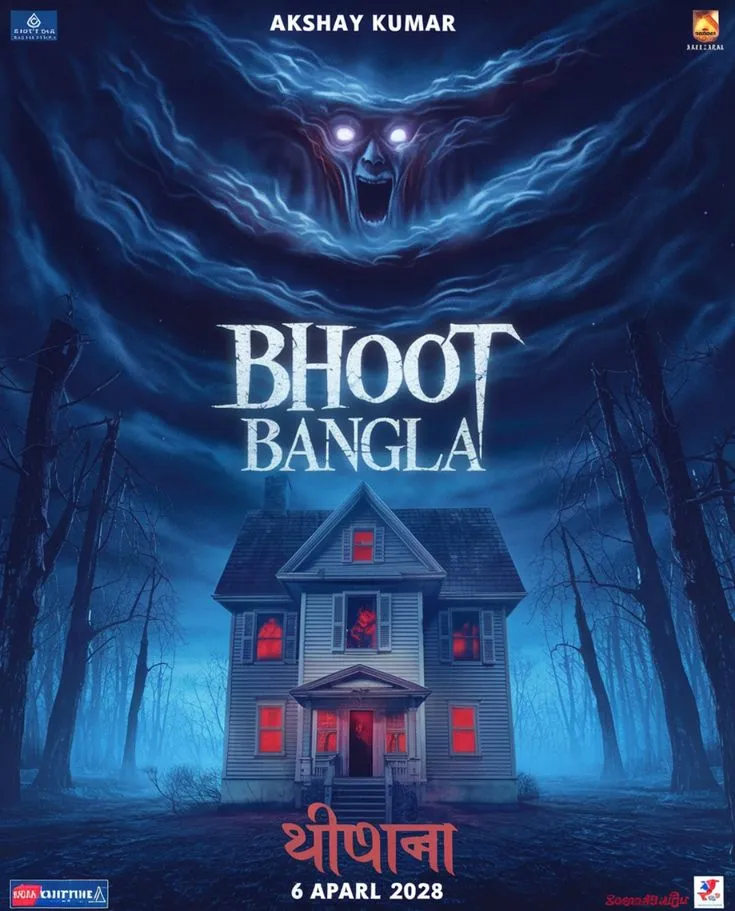
The film industry often thrives on nostalgia. Audiences flock to familiar faces and beloved genres. In this case, we have Bhooth Bangla, a horror comedy that brings together Akshay Kumar and director Priyadarshan after years apart. Their previous collaborations have yielded hits, so expectations are high.
Released on April 17, 2026, Bhooth Bangla has already made waves at the box office. It collected ₹3.5 crore from paid previews before its full release—a promising start. On opening day, the film raked in ₹12.61 crore, leading to a total gross of ₹18.90 crore by the end of day one. These figures suggest that audiences are eager for this blend of laughter and fear.
But what’s really going on beneath the surface? The story revolves around a wedding in a village cursed by a figure named Vadhusur—an intriguing premise that could either thrill or disappoint. Critics have noted that while the narrative may feel somewhat familiar, it leans heavily on performances and comedic moments to keep audiences engaged. However, some reviews have pointed out that the core story feels recycled, offering nothing particularly fresh.
Akshay Kumar stars alongside Tabu, Wamiqa Gabbi, and Rajpal Yadav—each bringing their own flair to this ghostly tale. The chemistry between these actors is palpable, which helps elevate the material even when it falters. Cinematography by Divakar Mani captures the eerie atmosphere effectively, while Pritam’s music adds an extra layer of charm.
Initial reactions from viewers seem mixed; some appreciate the humor while others lament the lack of originality in the plot. “The biggest problem with Bhooth Bangla is the core story,” one critic remarked, emphasizing that it feels like a recycled script from decades ago. Yet, as with many films in this genre, it ultimately comes down to how much you laugh—and how scared you get.
The film’s digital rights have already been acquired by Netflix, meaning fans won’t have to wait long for it to become available online—expected sometime in June or early July. This could broaden its audience significantly; after all, many prefer watching from home rather than braving the theater crowds.
As we delve deeper into this cinematic offering, one question looms large: can Bhooth Bangla carve out its own identity in a genre saturated with clichés? Or will it fade into obscurity like so many before it? Details remain unconfirmed as we await further insights from critics and box office analysts alike.