

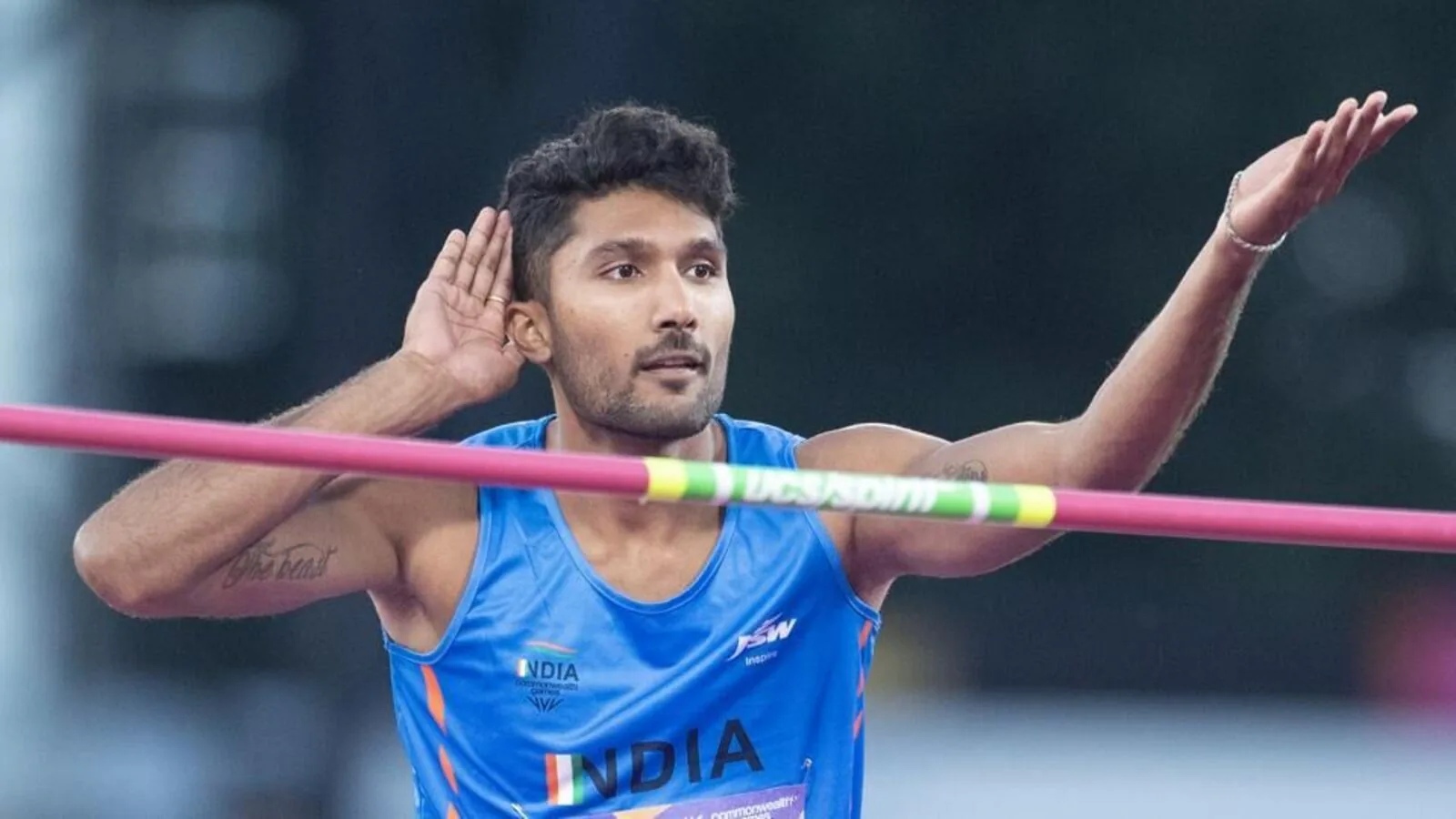
Shankar’s withdrawal from high jump final
India’s Tejaswin Shankar withdrew from the men’s high jump final at the Commonwealth Games 2026 in Glasgow on Monday after an unsuccessful initial attempt. The athlete failed to clear the opening height of 2.05 metres and subsequently pulled out of the competition. This development occurred at Scotstoun Stadium.
The withdrawal followed an initial period of confusion caused by an error on the official results website. The platform had listed Tejaswin Shankar as DNS (Did Not Start) for the final, suggesting a reduction in India’s representation from three athletes to two. However, live telecast visuals clarified that Shankar was present at the stadium, warming up alongside teammates Sarvesh Kushare and J Aadarsh Ram, indicating the DNS status was an administrative error.
Upon his first attempt at 2.05 metres, Shankar did not clear the bar. He was observed to be in discomfort after landing on the mat, leading to his decision to withdraw from the event shortly thereafter. No immediate official statement was released regarding the nature of the issue, and organisers along with the Indian contingent did not comment on whether this withdrawal would impact Shankar’s scheduled participation in the decathlon later in the Games.
Background and previous achievements
Tejaswin Shankar arrived in Glasgow as the defending bronze medallist in the high jump, having secured a medal at the 2022 Commonwealth Games in Birmingham. This achievement marked him as the first Indian athlete to win a medal in the men’s high jump at the Commonwealth Games, setting high expectations for his performance in the current competition.
Throughout 2026, Shankar demonstrated strong form, particularly in combined events. In February, he claimed the Asian Indoor Championships heptathlon title, establishing an Indian record of 5,993 points. Three months later, at the Federation Cup in Ranchi, he became the first Indian athlete to surpass the 8,000-point barrier in the decathlon, setting a national record of 8,057 points. These performances positioned him as one of India’s most versatile track-and-field athletes leading up to the Commonwealth Games.
Born on December 21, 1998, in Saket, New Delhi, Tejaswin Shankar initially aspired to be a fast bowler in cricket. His transition to athletics was encouraged by a physical education teacher at Sardar Patel Vidyalaya, who suggested it could improve his speed and agility for cricket. He quickly discovered an aptitude for high jumping, excelling in school competitions before fully committing to athletics.
His journey was also shaped by personal challenges, including the loss of his father, Harishankar, in 2014. Despite this, he continued his athletic pursuits with the support of his mother, Lakshmi, progressing steadily through junior levels. In 2017, his success in high jump earned him a four-year athletics scholarship to Kansas State University in the United States, where he studied accounting and finance while competing in the NCAA circuit.
In 2018, Shankar set the Indian outdoor high jump record at 2.29m and the indoor national record at 2.28m. These records remain among the best performances by an Indian athlete in the discipline. He also achieved gold at the 2015 Commonwealth Youth Games.
Impact on India’s medal tally
The early exit in the high jump final for Tejaswin Shankar was a setback, with attention now turning to his potential recovery for the multi-event competition. Despite this, India’s medal tally continued to grow on Monday.
Gyaneshwari Yadav secured a silver medal in the women’s 53kg weightlifting event. Additionally, Bindyarani Devi earned a bronze medal in the women’s 58kg category. These two podium finishes ensured India’s progress in the medal standings at the Commonwealth Games 2026.
The Indian contingent is awaiting further medical updates regarding Tejaswin Shankar’s condition following his withdrawal from the high jump final.
Source: outlookindia.com