


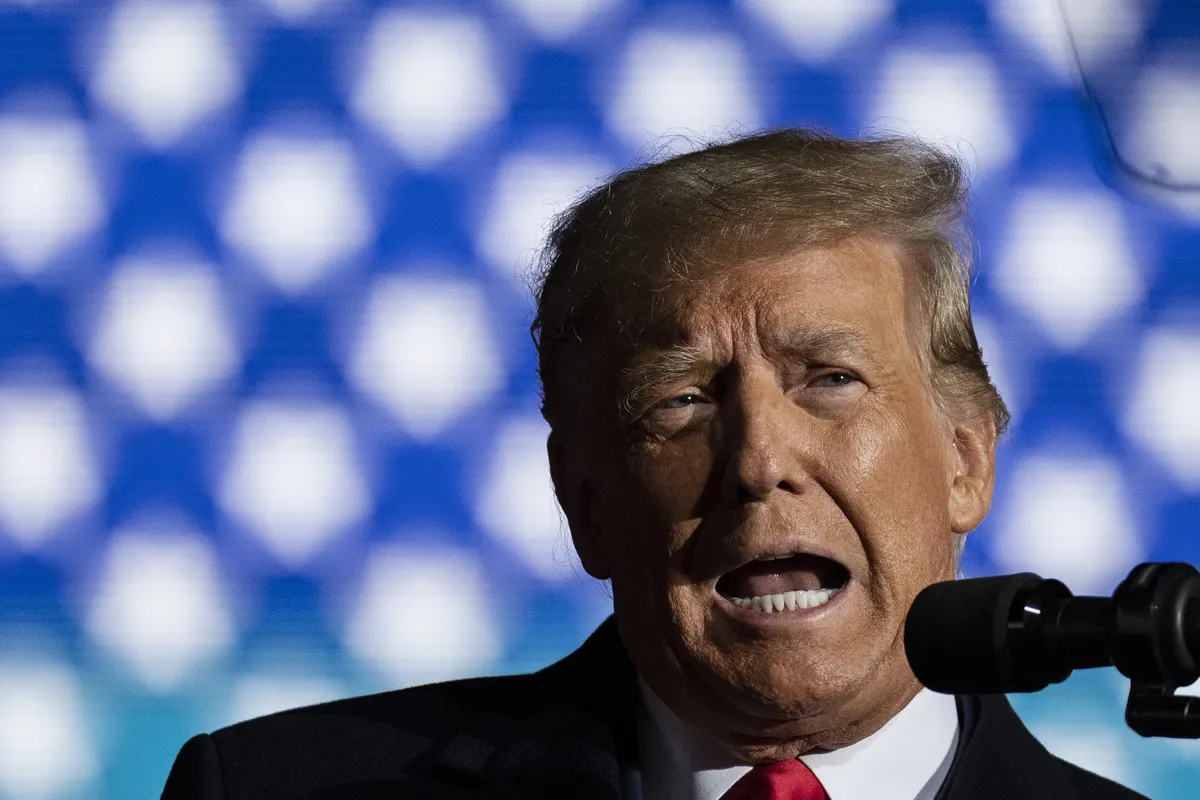
What does Donald Trump’s announcement today regarding Iran negotiations mean for the future of U.S.-Iran relations? In a surprising turn, Trump declared a postponement of military strikes against Iranian power plants for five days, citing productive discussions between the two nations.
During a press briefing in Florida, Trump stated, “I have instructed the Department of War to postpone any and all military strikes against Iranian power plants and energy infrastructure for a five day period, subject to the success of the ongoing meetings and discussions.” This statement comes amid escalating tensions in the region, particularly concerning Iran’s control over the Strait of Hormuz, a crucial passage for global oil and liquefied natural gas supplies.
Despite Trump’s optimistic tone, Iranian officials have denied any negotiations took place, with Iran’s Parliament Speaker, Mohammad Bagher Ghalibaf, asserting, “No negotiations have been held with the US.” This contradiction raises questions about the validity of the talks and the potential for a diplomatic resolution.
Trump’s announcement has already had tangible effects on the financial markets, with S&P 500 futures soaring more than 2.5%, while West Texas Intermediate futures dropped nearly 6%. The market’s reaction indicates a cautious optimism among investors regarding the potential for a peaceful resolution.
In his remarks, Trump emphasized that for a deal to be reached, Iran must relinquish its enriched uranium stockpile. This condition aligns with longstanding U.S. concerns over Iran’s nuclear ambitions and its role in regional instability.
The backdrop to this announcement is the ongoing U.S.-Israeli war on Iran, which has intensified the crisis across the Middle East. Trump’s comments suggest a possible off-ramp for escalating military conflict, yet the outcome of the ongoing talks remains uncertain.
As the situation develops, the international community watches closely. The likelihood of Iran accepting Trump’s ultimatum is debated, with some analysts suggesting that the chances are slim. Mohamed Vall, a political analyst, remarked, “The likelihood that they will refuse this offer from Trump is remote.” However, the exact nature of the ‘major points of agreement’ claimed by Trump is still unclear.
In the coming days, the world will be keenly observing how both sides navigate this precarious situation. Iran has already threatened retaliation if the U.S. proceeds with military strikes, adding another layer of complexity to the negotiations.
Details remain unconfirmed, and the future of U.S.-Iran relations hangs in the balance as both nations grapple with their respective positions.