

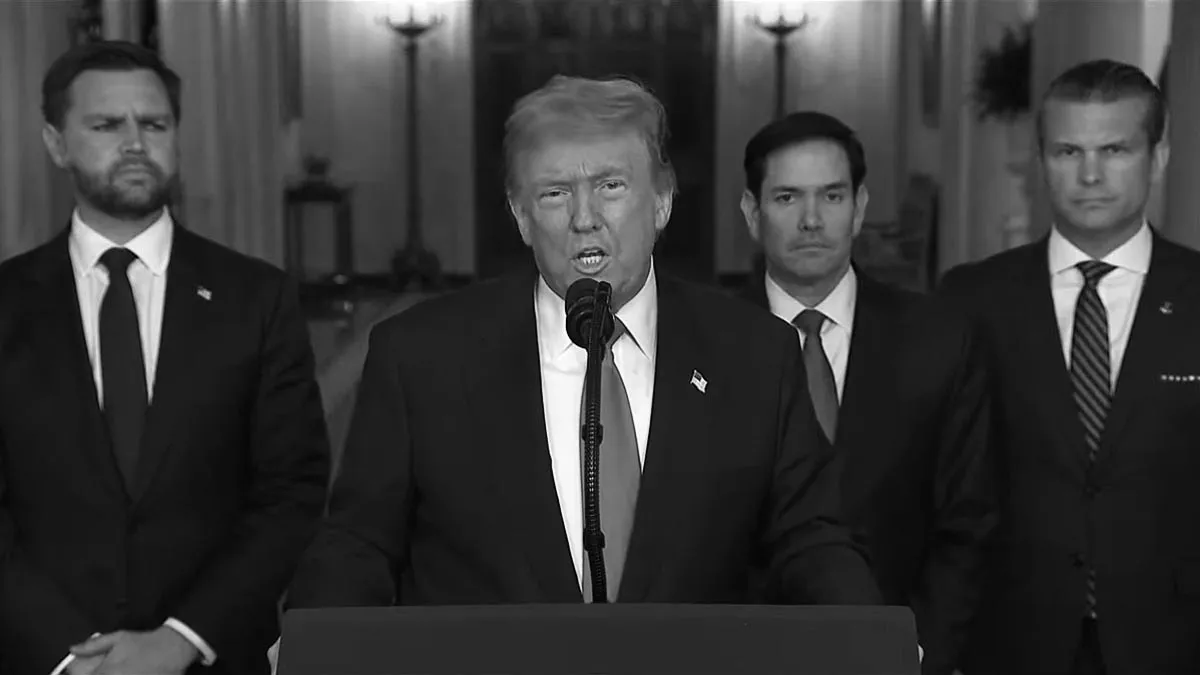
What does Donald Trump’s latest address to the nation reveal about the ongoing conflict with Iran? In short, he claims that the US is “getting very close” to achieving its military objectives, despite widespread public opposition to the war.
During his speech, Trump stated that the US military has nearly completed its goals, asserting that Iran’s navy and air force have been destroyed, and its ballistic missile and nuclear programs severely crippled. He emphasized the urgency of the situation, promising to bomb Iran into “the Stone Ages” if a deal is not reached.
However, Trump did not provide any specifics on how the conflict would conclude or what kind of agreement he is seeking with Iran. His remarks came as public opinion polls show that a significant majority of Americans oppose the conflict, with only 28% supporting it according to a recent YouGov poll.
Trump acknowledged the economic impact of the war, noting that Americans are facing higher petrol prices, which have surpassed $4 per gallon for the first time since 2022. This increase comes as Iran has effectively shut the Strait of Hormuz, a crucial passage for global oil supply.
In the backdrop of this conflict, the US has been engaged in military operations against Iran for over a month. Trump’s speech, lasting less than 20 minutes, reiterated familiar points without introducing new information. Trita Parsi, a notable commentator, remarked that the address was essentially a summary of Trump’s recent tweets.
While Trump claimed that regime change has occurred in Iran following the deaths of its original leaders, this assertion is disputed by experts like Jamal Abdi, who argue that the regime remains intact and perhaps even more hardened.
Details remain unconfirmed regarding the status of negotiations with Iran, and the exact state of its nuclear program remains unclear. The conflict has now spanned 32 days, raising questions about the direction of US foreign policy in the region.
As the situation evolves, it remains to be seen how the administration will navigate the complexities of international relations and domestic sentiment regarding the war.