



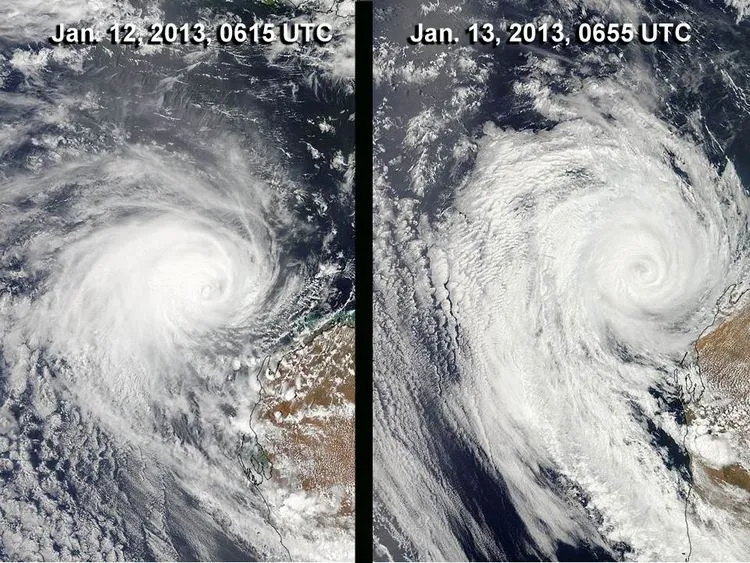
As Tropical Cyclone Narelle approached Western Australia, residents were bracing for impact. The cyclone, which peaked as a Category 3-4 severe tropical cyclone, began to unleash its fury on March 27, 2026. What unfolded was not just a powerful storm, but a visual spectacle that would leave many in awe.
In the lead-up to the cyclone’s landfall, the sky above Western Australia transformed into a blood-red hue. This eerie phenomenon was caused by dust storms triggered by Narelle, which vacuumed up iron-rich dust from the Australian outback. The result was a striking crimson daylight that captivated onlookers.
Areas such as Shark Bay and Denham experienced the most vivid displays of this unusual sky. As the cyclone’s winds exceeded 125 kilometres per hour, visibility in the Gascoyne region dropped to near zero, creating a surreal and unsettling atmosphere. Residents reported that daylight seemed to vanish within minutes, as the air thickened with dust.
AccuWeather noted, “NO, that’s not a filter! The sky turned an eerie shade of red in Western Australia as dust filled the air ahead of Tropical Cyclone Narelle.” This striking visual quickly spread online, sparking discussions and debates about the phenomenon.
The dust storm was particularly high in iron oxide, which reflects red light, contributing to the dramatic change in the sky’s appearance. The cyclone is notable for being only the third storm in recorded history to make landfall on three separate Australian coastlines, highlighting its unusual path and impact.
As the storm continued its course, the intense winds not only created a striking visual but also led to a significant reduction in air quality. Residents faced challenges as they navigated through the thick dust, with many expressing concern over the health implications.
The events surrounding Tropical Cyclone Narelle serve as a reminder of the powerful forces of nature and their ability to create both beauty and chaos. The striking visuals of the red sky will likely linger in the memories of those who witnessed it, while the implications of such weather phenomena continue to be a topic of discussion.
For now, the cyclone’s effects are still being assessed, and details remain unconfirmed as the situation evolves. The intersection of climate and weather patterns is a pressing concern, especially as such events become more frequent.
As Western Australia recovers from this extraordinary event, the striking imagery of the red sky will undoubtedly be a focal point in discussions about the impacts of climate change and extreme weather.