




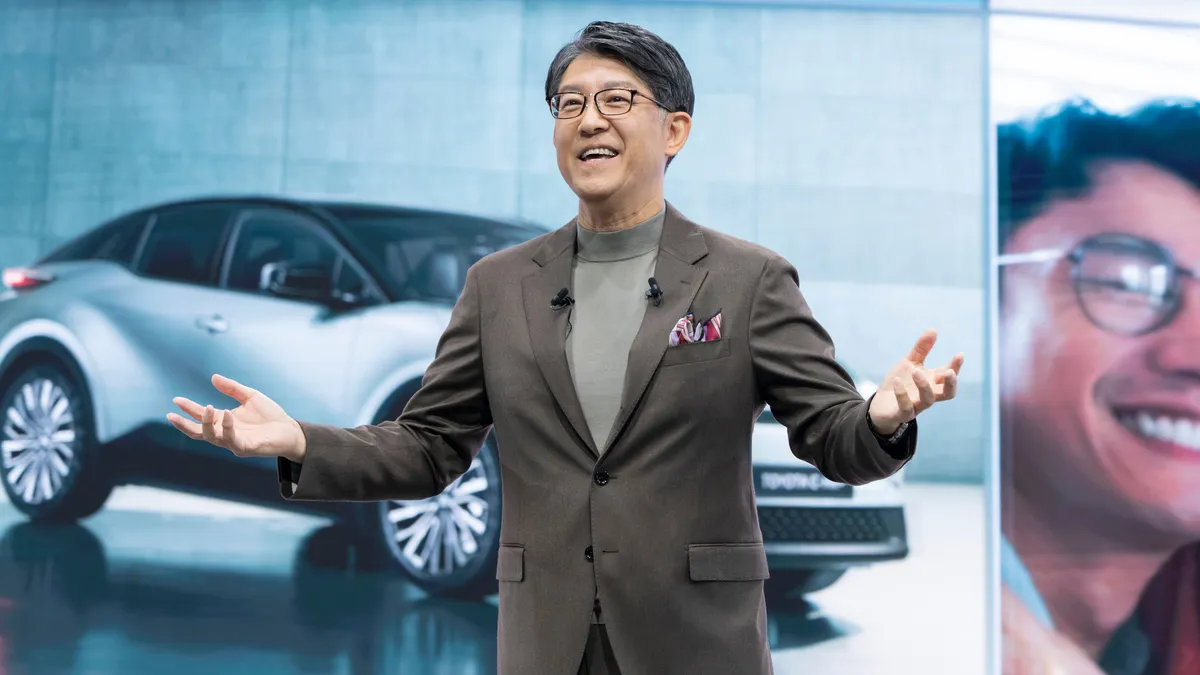
Toyota is currently navigating a challenging landscape in the automotive industry, facing increasing pressures from rising competition, particularly from Chinese electric vehicle (EV) makers. In this context, Toyota CEO Koji Sato has taken a decisive step by warning 484 of the company’s top suppliers to enhance their productivity if they wish to remain viable in this rapidly evolving market.
Sato’s message was clear: “Unless things change, we will not survive.” This stark declaration underscores the urgency of the situation, as the automotive industry grapples with significant shifts and challenges. Sato emphasized the necessity for suppliers to improve throughput, reduce scrap, and implement tighter quality controls.
The warning from Sato is not merely a routine review; it represents a serious call to action. He highlighted the need for measurable cuts in cost-per-vehicle and reductions in defects, reflecting a broader shift towards efficiency and cost control across the supply chain. This approach is critical as Toyota aims to meet its ambitious production targets for 2026 while protecting its profit margins.
Last year, Toyota achieved a record delivery of 11,322,575 automobiles globally, but the company recognizes that maintaining such success requires adaptation and improvement. Incoming CEO Kenta Kon echoed Sato’s sentiments, stating, “Each side drives the other to grow stronger,” indicating a collaborative approach to overcoming these challenges.
Sato’s warning also reflects the intense competition within the automotive sector, which he described as a battle for survival. As the industry evolves, the need for suppliers to step up their game has never been more critical. Sato remarked, “To enable us to make more cars, we must step things up a gear in areas such as building quality into every process.” This highlights the importance of quality assurance in the manufacturing process.
As observers await Toyota’s upcoming announcement regarding its 2025 results, the implications of Sato’s warning are clear: the automotive industry is at a crossroads, and suppliers must adapt or risk being left behind. The call for enhanced productivity and efficiency is not just a response to current pressures but a proactive strategy to secure a competitive edge in the future.
Details remain unconfirmed regarding the specific measures suppliers will need to implement, but the urgency of Sato’s message is unmistakable. The next steps for Toyota and its suppliers will be closely watched as the company seeks to navigate this tumultuous period in the automotive landscape.