




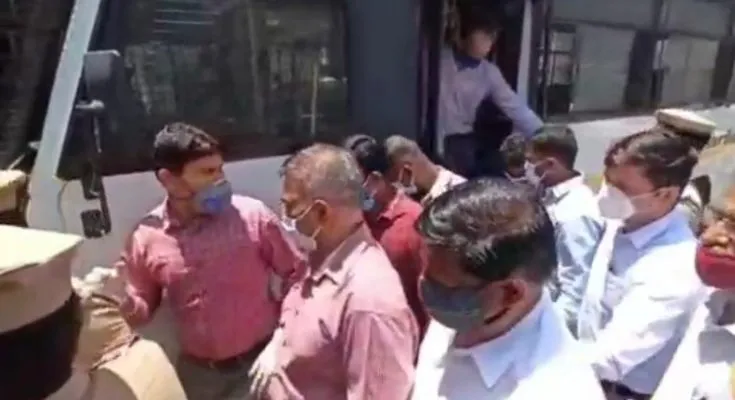
The Sathankulam case has been a focal point of discussion regarding police accountability in India since the tragic deaths of Jayaraj and Bennix in June 2020. Initially, there was a prevailing expectation that the case would be swept under the rug, given the historical context of police impunity in the country. However, the recent judgement delivered by the First Additional District and Sessions Court in Madurai has dramatically shifted this narrative.
On March 23, 2026, all nine police officers accused in the custodial deaths were found guilty, a decisive moment that many had hoped would bring justice to the victims’ families. The court concluded that the injuries inflicted on Jayaraj and Bennix were unnatural and directly caused their deaths, rejecting the defense’s claims that the injuries were self-inflicted.
This judgement comes nearly six years after the incident, during which the case underwent extensive scrutiny, involving the examination of over 100 witnesses. The trial highlighted the systemic issues of custodial violence and the urgent need for reforms within law enforcement agencies.
The deaths of Jayaraj and Bennix were not isolated events; they occurred during the COVID-19 pandemic lockdown, which sparked widespread protests against police brutality across India. The public outcry led to a judicial inquiry initiated by the Madurai bench of the Madras High Court, which took suo motu cognizance of the case.
Following the High Court’s intervention, the investigation was transferred to the Central Bureau of Investigation, marking a significant step towards accountability. Charges were framed against the officers for multiple offences under the Indian Penal Code, including murder, reflecting the severity of their actions.
As the sentencing for the guilty officers is scheduled for March 30, 2026, the implications of this judgement extend beyond the courtroom. It serves as a reminder of the importance of holding law enforcement accountable for their actions, especially in cases of custodial violence.
Judge G Muthukumaran’s statement encapsulated the gravity of the situation: “The injuries inflicted on Jayaraj and Bennix were unnatural, which ultimately caused their death.” This assertion underscores the court’s commitment to justice in a case that has drawn national attention.
While this judgement is a step forward, it also raises questions about the future of police accountability in India. As one High Court judge aptly noted, “Justice delayed is justice denied and justice hurried is justice buried.” The need for timely and effective justice remains paramount.
In a society where the rule of law must prevail, the Sathankulam case judgement stands as a pivotal moment in the ongoing struggle against custodial violence and the fight for justice for victims and their families.