




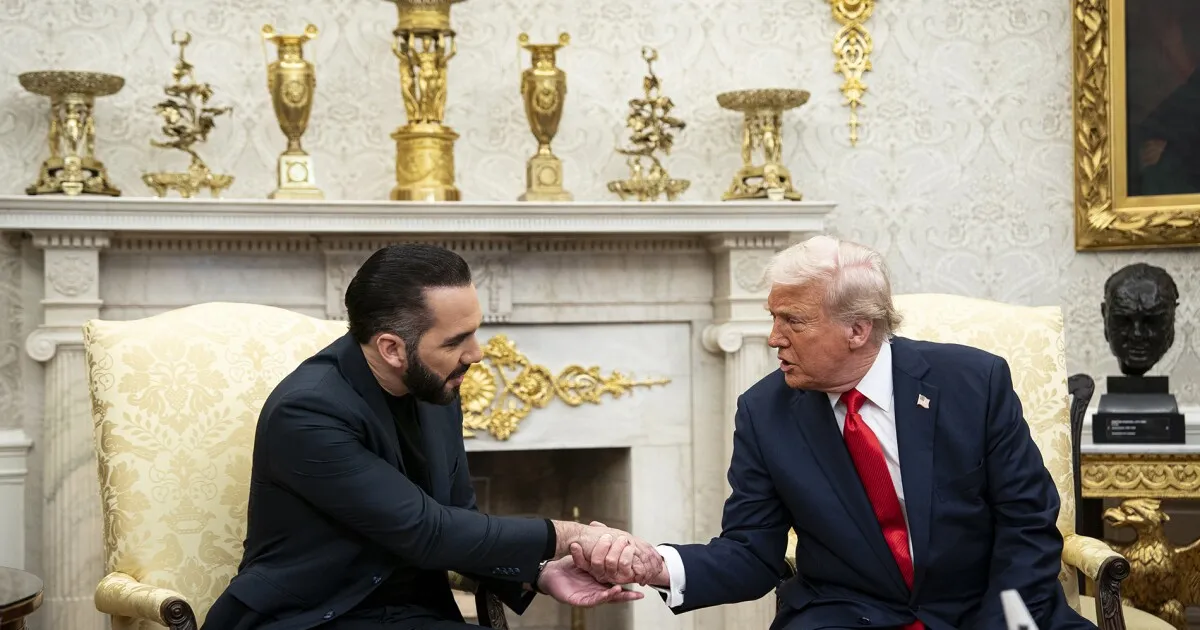
As El Salvador approaches a critical juncture in its ongoing battle against gang violence, the atmosphere is charged with tension and uncertainty. President Nayib Bukele’s administration has implemented a state of exception for four years, leading to the detention of approximately 91,000 individuals, many of whom are accused of gang affiliation.
On April 7, 2026, the documentary ‘The Deal: Trump, Bukele & the Gangs of El Salvador’ is set to premiere, shedding light on the controversial agreement between Bukele and former President Donald Trump. This deal reportedly involves the imprisonment of deportees suspected of gang ties, further complicating the already fraught landscape of justice in the country.
Mass trials are now underway, with the attorney general’s office promising 3,000 indictments in the first quarter alone. The trials, however, have drawn criticism for lacking basic guarantees of due process, raising concerns about wrongful convictions. As Reynaldo Santos, a detainee, poignantly describes, “It is Russian roulette, anguish, an ordeal.”
Among those caught in this web is Williams Díaz, who was detained while simply on his way to work. He now awaits trial in a mega-prison designed specifically for gang members. Similarly, Jonathan, a 24-year-old maquila worker, finds himself grouped with around 80 others in a Mara Salvatrucha clique, facing the grim reality of mass incarceration.
Human Rights Watch has documented numerous detentions triggered by anonymous tips and neighborhood disputes, highlighting the chaotic nature of the current enforcement strategies. Critics argue that the reforms to the organized crime law have stripped away essential legal protections, including the evaluation of evidence during hearings.
As the government pushes forward with life sentences for gang members, including minors, the implications for society are profound. Gladis Villatoro, a family member of a detainee, reflects on the grim reality: “Some will pay for others. If they convict one, they convict the whole group.” This sentiment underscores the collective punishment that many fear is becoming the norm.
Despite the backlash, Bukele maintains a strong grip on power, controlling all branches of the state and enjoying popularity for his aggressive stance on gang violence. However, the rising number of wrongful arrests and the reported 500 deaths in prison under the state of exception cast a long shadow over his administration’s achievements.
As El Salvador navigates this turbulent period, the urgency for a fair and just legal process becomes ever more critical. The exact number of wrongful arrests remains unclear, and the specifics of the deal between Trump and Bukele are still unconfirmed. The nation stands at a crossroads, with the path forward fraught with challenges and the potential for significant change.