



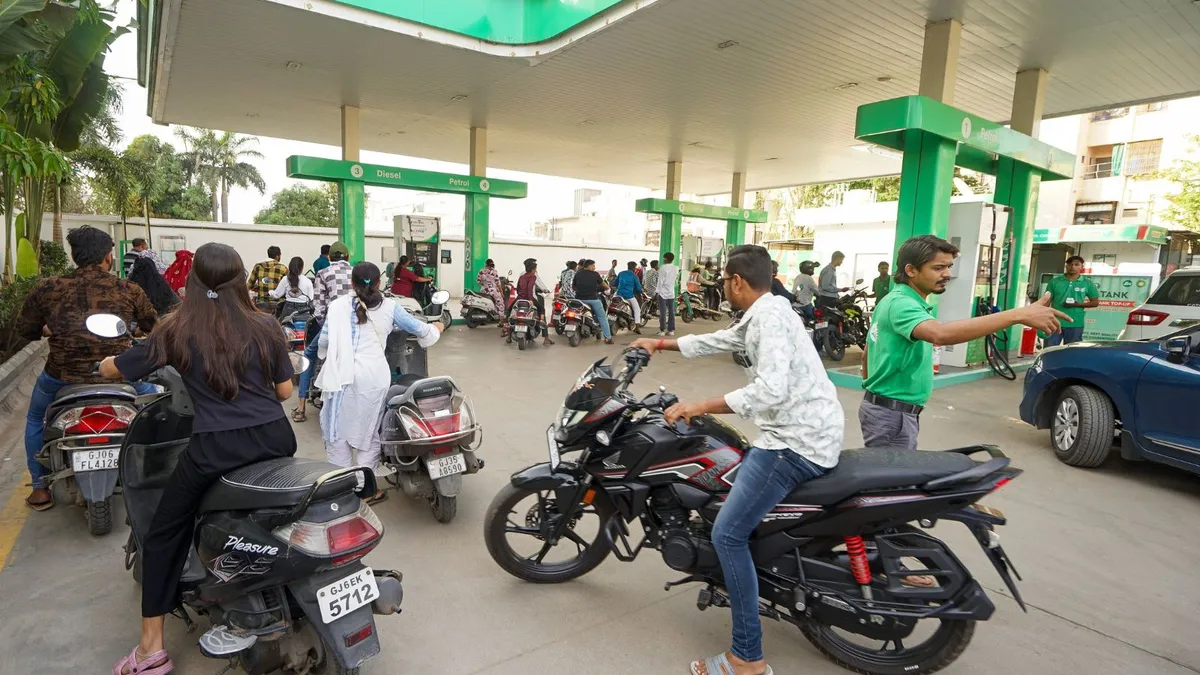
In recent days, residents of Ahmedabad have found themselves in long queues at fuel stations, driven by a wave of panic buying sparked by rumors of a petrol shortage. This situation has unfolded against a backdrop of rising global oil prices, largely attributed to the ongoing conflict in West Asia, which has raised concerns about oil supply worldwide.
Despite the visible signs of distress among consumers, the state government has reassured the public that there is ample stock of petrol and diesel available in Gujarat. Deputy Chief Minister Harsh Sanghavi has urged citizens to remain calm and not succumb to the panic fueled by misinformation circulating on social media platforms. “There is enough stock of petrol and diesel available in the state and so people need not do hoarding or panic,” he stated, attempting to quell the growing anxiety.
The panic was reportedly exacerbated by a sudden change in payment systems implemented by oil marketing companies, which left many consumers confused and concerned about their ability to access fuel. Approximately 30-40% of retail outlets in Gujarat are currently facing supply issues due to logistical difficulties, which has further contributed to the sense of urgency among drivers looking to fill their tanks.
In response to the situation, the Indian Oil Corporation has confirmed that adequate supplies of petrol and diesel are indeed available in Gujarat. Sujata Sharma, a spokesperson for the corporation, emphasized, “These are not dry outs. We have checked it from the field and all petrol pumps are working normally and adequate fuel is available at all such facilities.” This statement aims to reassure the public that the fuel supply chain remains intact despite the temporary disruptions.
The current crisis has also been linked to the rising price of crude oil, which has surged from USD 60 to USD 118-120 per barrel due to geopolitical tensions. This increase has led to a refining loss of 36-38 per litre faced by oil marketing companies, prompting them to implement an advance payment policy for fuel dealers. This policy change has added to the confusion and anxiety among consumers, who are now worried about the availability of fuel.
Officials are closely monitoring the situation and holding regular review meetings to ensure that the supply of petrol and diesel remains stable. “The government is fully prepared to ensure that petrol and diesel are available at all pumps,” Sanghavi assured the public, indicating a proactive approach to managing the crisis.
As the situation develops, it is crucial for citizens to remain informed and not give in to the rumors that have been circulating. “People should not pay attention to rumours being spread through social media or WhatsApp,” Sanghavi advised, highlighting the importance of relying on official communications rather than unverified information. The government’s efforts to stabilize the situation will be key in preventing further panic among the public.
The wider picture
Fuel retailers have reported that India maintains a 70-day reserve of crude oil, indicating that there is no immediate shortage of fuel in the country. However, the combination of rising prices and logistical challenges has created a perfect storm that has led to the current panic buying scenario in Ahmedabad. As the government works to address these issues, it remains to be seen how quickly normalcy can be restored to the fuel supply chain.