



The Los Angeles Lakers and the Utah Jazz have had a storied rivalry, but as the regular season approached its conclusion, expectations were set against the backdrop of the Lakers’ strong performance throughout the year. The Lakers, boasting a 52-29 record, were seen as a formidable contender heading into the playoffs, while the Jazz struggled significantly with a 22-59 record. The anticipation was palpable as fans looked forward to how these two teams would fare in their final matchup of the season.
However, the landscape changed dramatically leading up to the game on April 12, 2026. LeBron James was listed as questionable, raising concerns among Lakers fans about his availability. Adding to the uncertainty, both Luka Dončić and Austin Reaves were ruled out for the game, leaving the Lakers with a thinner roster than expected. On the other side, the Jazz were missing key players, including Lauri Markkanen and Jaren Jackson Jr., further diminishing their chances in this critical matchup.
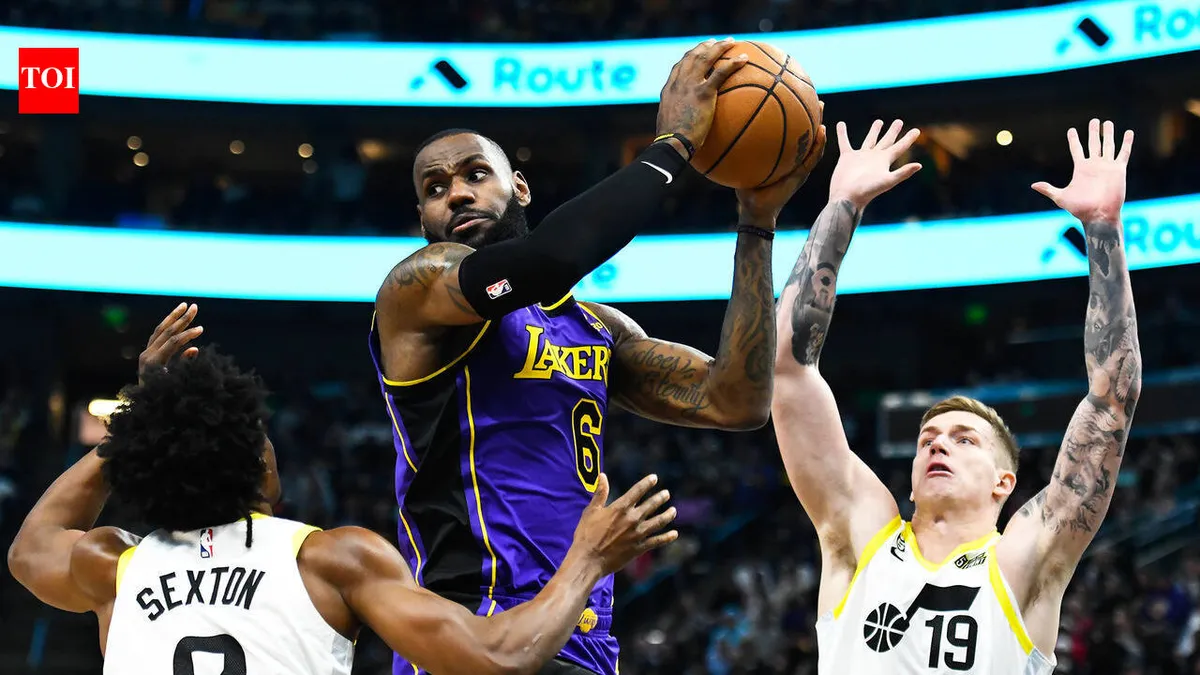
As the game unfolded, the Lakers showcased their depth and resilience, ultimately securing a decisive 131-107 victory over the Jazz. LeBron James, despite the pre-game doubts, contributed 18 points, 4 rebounds, and 6 assists, while Rui Hachimura shone brightly with 22 points and 10 rebounds. The Lakers’ bench also made a significant impact, scoring an impressive 61 points, highlighting their ability to capitalize on the Jazz’s weaknesses.
The immediate effects of this game were profound. With the victory, the Lakers not only solidified their position in the Western Conference but also set themselves up for a favorable playoff seed. If they win, they could potentially take the 3rd seed, contingent upon the Denver Nuggets losing their matchup against the San Antonio Spurs. This victory was not just a win; it was a statement about the Lakers’ readiness for the challenges ahead.
From a statistical perspective, the Lakers dominated in several key areas. They averaged 116 points per game against the Jazz, while the Jazz managed only 118 points in their matchups. The Lakers also outperformed the Jazz in field-goal percentage, shooting 50.4% compared to the Jazz’s 44.3%. This disparity in performance metrics underscores the Lakers’ superiority in this matchup throughout the season.
Experts have noted the significance of this game in the broader context of the playoffs. “Every single Laker scored on the night,” remarked one analyst, emphasizing the team’s depth and collective effort. This game served as a crucial tune-up for the Lakers as they prepared to host the Houston Rockets in the first round of the playoffs, showcasing their ability to adapt and thrive even under pressure.
As the Lakers look ahead, they carry the momentum from this victory into the playoffs, while the Jazz must regroup and reflect on a challenging season. The contrast between the two teams’ trajectories could not be more pronounced, with the Lakers poised for a deep playoff run and the Jazz facing a long offseason to reassess and rebuild.
In the end, the Lakers vs Jazz matchup was not just another game; it was a reflection of the shifting dynamics in the NBA landscape, illustrating how quickly fortunes can change in professional basketball. Details remain unconfirmed regarding the future strategies of both teams, but one thing is clear: the Lakers are ready to make their mark in the postseason.