


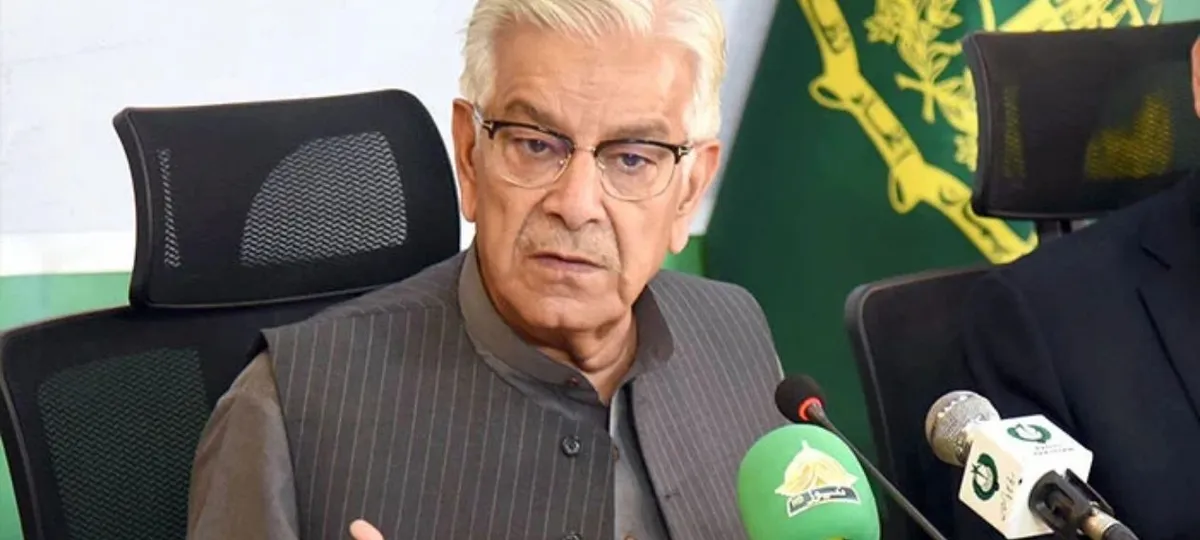
In a significant escalation of rhetoric, Khawaja Asif, Pakistan’s Defence Minister, has issued a stark warning to India regarding potential military action. Speaking to reporters in Sialkot, Asif stated that Pakistan would respond with a strike on Kolkata if hostilities were to arise between the two nations.
This warning comes in the wake of heightened tensions following the Pahalgam attack, which had previously sparked a four-day conflict between India and Pakistan last year. Asif’s remarks were a direct response to Indian Defence Minister Rajnath Singh’s recent statement about taking ‘unprecedented action’ against Pakistan.
Asif claimed that India is allegedly planning false flag operations, suggesting that the Indian government could stage incidents involving detained Pakistanis to justify military action. He did not provide any evidence to support these claims, leaving many to question the validity of his assertions.
During his address, Asif emphasized that Pakistan’s response to any attack from India would be ‘swift, calibrated, and decisive.’ He stated, “If India tries to stage any false flag operation this time, then God-willingly, we will take it to Kolkata.” This statement underscores the seriousness with which Pakistan views the potential for conflict.
The backdrop of these comments is critical, as both nations have a long history of military confrontations and diplomatic tensions. The Pahalgam attack has reignited fears of escalation, and Asif’s comments may further inflame the situation.
As tensions continue to rise, the international community is closely monitoring the situation. Both nations possess significant military capabilities, and any miscalculation could lead to severe consequences.
As of now, the situation remains fluid, with both sides on high alert. The potential for conflict looms large, and the implications of Asif’s statements could have far-reaching effects on regional stability.
Details remain unconfirmed regarding the specific nature of India’s alleged plans, but the rhetoric from both sides suggests that diplomatic solutions are increasingly difficult to achieve.
In this charged atmosphere, the stakes are high, and the actions taken by both nations in the coming days will be critical in determining whether tensions escalate or de-escalate.