
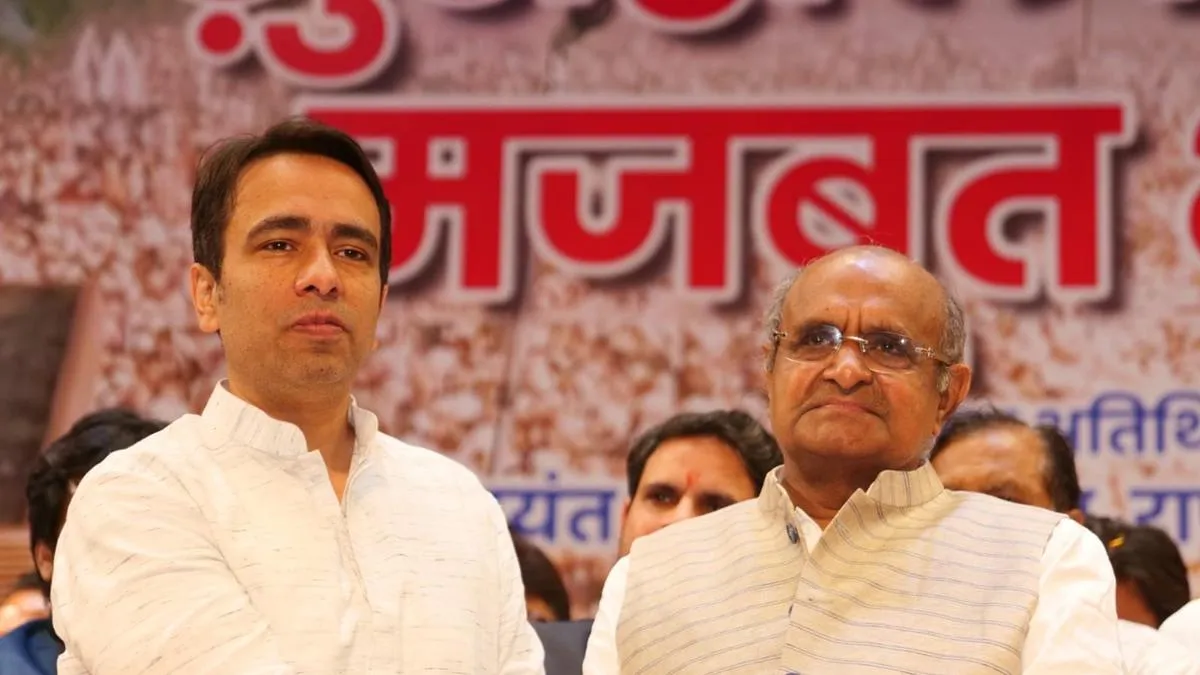
K.C. Tyagi’s political journey has taken a notable turn with his recent decision to join the Rashtriya Lok Dal (RLD) after a long tenure with the Janata Dal-United (JD(U)). Previously, Tyagi was a founding member of the JD(U) and served as its chief national spokesperson and national secretary general. His departure from the JD(U) on March 17, 2026, came as a surprise to many, especially given his longstanding relationship with Nitish Kumar, the party’s leader.
The decisive moment for Tyagi came just days later, on March 22, 2026, when he formally joined the RLD. This shift is not just a change of party; it reflects a broader ideological alignment that Tyagi perceives between the JD(U) and RLD. He stated, “I don’t see any difference between Lok Dal, RLD and JDU,” indicating that his commitment to the welfare of farmers and the downtrodden remains steadfast.
Tyagi’s move is expected to have significant implications for the political landscape in western Uttar Pradesh, where the RLD has been working to strengthen its base. He believes that a robust RLD will enhance the strength of the alliance, which is crucial for upcoming elections. His focus on farmer welfare and the interests of agriculturalists aligns with the RLD’s core mission, suggesting a strategic fit.
Experts have noted that Tyagi’s experience and connections could bolster the RLD’s position in the region, particularly as the party seeks to regain influence. His historical ties to the RLD date back to its founding in 1974, which adds a layer of depth to his return.
As Tyagi embarks on this new chapter, he emphasizes his unwavering commitment to the interests of the marginalized sections of society. “My commitment to the broader ideological points concerning the interests of the downtrodden, peasants and agriculturalists, including the deprived sections of society, remains as firm as ever,” he remarked, reinforcing his dedication to these causes.
While the implications of this shift are still unfolding, Tyagi’s transition to the RLD marks a significant moment in his political career and the broader dynamics of Indian politics. Details remain unconfirmed regarding how this will affect the JD(U) and its future strategies.