




How it unfolded
In early April 2026, the geopolitical landscape surrounding Iran reached a critical juncture. Tensions had been simmering for months, but the situation escalated dramatically when U.S. President Donald Trump issued an ultimatum demanding that Iran reopen the strategically vital Strait of Hormuz by a self-imposed Tuesday deadline or face military strikes. This bold declaration set the stage for a series of retaliatory actions and heightened military posturing.
On April 5, Iran responded defiantly to Trump’s threats, with officials stating they had “lost the keys” to the Strait, effectively rejecting the ultimatum. The Strait of Hormuz is a crucial passage for global oil shipments, and Iran’s control over it has been a longstanding point of contention. In a show of strength, Iranian military leaders warned that any attack by the U.S. or Israel would prompt them to restrict access to the Bab el-Mandeb Strait as well, further complicating the already tense maritime security situation.
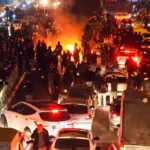
As the deadline approached, airstrikes targeted Tehran, resulting in explosions in civilian areas, including Qom, where five people were reported killed. The Iranian military’s response was swift; they downed a U.S. F-15E fighter jet, leading to a complex rescue operation involving multiple aircraft. The conflict’s toll on human life was staggering, with over 1,900 people reported killed in Iran since the war began, highlighting the dire humanitarian implications of the escalating violence.
In the wake of these events, Iran’s joint military command issued a stark warning of increased attacks on regional oil and civilian infrastructure. This was not merely a defensive posture; it was a clear signal of Iran’s intent to expand its military response beyond its borders. Iranian officials have also tied the reopening of the Strait to compensation for war damages, indicating that any diplomatic resolution would require significant concessions from the U.S.
Trump’s threats included targeting critical infrastructure such as Iran’s power plants and bridges, further inflaming tensions. In a particularly incendiary statement, he warned, “Open the F*****’ Strait, you crazy b*******, or you’ll be living in Hell – JUST WATCH! Praise be to Allah.” This rhetoric has only served to deepen the divide between the two nations, with Iranian officials condemning Trump’s threats as “clear evidence of intent to commit war crime,” according to Iran’s U.N. mission.
As military actions escalated, the humanitarian crisis deepened. Reports indicated that 13 people were killed in an airstrike near Eslamshar, and the conflict’s ripple effects were felt across the region, with casualties reported in Lebanon and the UAE as well. In Beirut, four people lost their lives due to an Israeli strike, while three were injured in the UAE from debris from intercepted projectiles. The ongoing violence has raised alarms about the potential for a broader regional conflict.
Despite the escalating military actions, diplomatic efforts have not ceased. Talks involving Oman and other regional powers are ongoing, as stakeholders seek to de-escalate tensions. However, the path to peace appears fraught with challenges, as both sides remain entrenched in their positions. Iranian officials have expressed skepticism about the U.S.’s willingness to engage in meaningful dialogue, given the current climate of hostility.
As of now, the situation remains fluid, with details on the exact number of casualties and the status of ongoing military operations still unconfirmed. The stakes are incredibly high, not just for Iran and the U.S., but for the entire region, as the potential for a wider conflict looms large. The world watches closely, aware that the outcomes of these events could reshape the geopolitical landscape for years to come.